


“We are becoming citizens of the world”: RUDN University has compiled a portrait of an African student
Spoiler: this is likely someone from Angola, Nigeria, or Ethiopia (but certainly not limited to these countries), who wants to become a doctor, economist, or engineer. He is confident that knowledge of Russian is essential for his professional development, and he had no doubt about his choice of RUDN University—it’s hard to find a university with a more international student body and a more friendly atmosphere. Especially since the word “friendship” even appears in the university’s name.
Which countries do African students come from?
Peoples’ Friendship University of Russia (RUDN University) most often attracts African students from Angola, Nigeria, Ethiopia, Cameroon, and Chad.
Students from African countries make up approximately one-fifth of all students at RUDN University, representing over 2,500 out of a total of 13,000. Students from Asian countries (over 4,000, or 36.4%) and the CIS (33%) rank first and second, respectively, while students from Africa rank third.
“The university welcomes students of various nationalities and supports intercultural exchange. Here I can learn from people with diverse cultural backgrounds, develop my skills, and prepare for my professional future,” said Sory Aliou Diallo from Mali (bachelor’s in Linguistics). “My goal is to successfully complete my studies, deepen my knowledge in linguistics, and become a competent specialist, open to the world, and capable of contributing to the development of my country, Mali.”
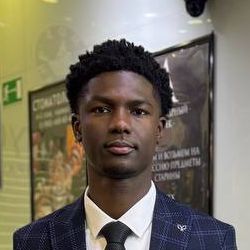
Oba Jacques Rony from the Republic of Congo (undergraduate, Institute of World Economy and Business) noted that if you go to university in another country, it’s worth choosing a place that will be comfortable for you.
“RUDN University is a melting pot of different nationalities and cultures, and this helps me learn a lot,” he said.
What African students want to study
Traditionally, General Medicine tops the list of majors chosen by African students. Nursing also ranks fourth in the top five.
International Relations and Economics are second and third in popularity. Management rounds out the top five.
But looking further, engineering, law, and physics and mathematics are also popular among African applicants.
Benichiza Uwera Marie Alice from Rwanda (specialist, Dentistry) said she was looking for a university and country with strong medical traditions. Jean-Pierre Sishougi from the Democratic Republic of the Congo (bachelor’s, Engineering) said the same about engineering.
Tariku Bedaso from Ethiopia (master’s in Applied Mathematics and Computer Science) noted that Russia has a long and internationally recognized tradition in mathematics and computer science.
“The Russian school of mathematics has trained world-class scientists and made significant contributions to fields such as numerical analysis, cryptography, optimization, and the theory of algorithms. Studying here means learning in a system that emphasizes a solid theoretical foundation and a rigorous approach to problem solving — exactly what I need to develop as a specialist in applied mathematics and computer science,” he said.
Why African Students Want to Study in Russia
Among the main reasons African students are willing to go to Russia are the high level of education and renowned Russian culture.
Chinyama Kazombo from Zambia (master’s in General Medicine) chose Russia because he has loved Russian literature since childhood, especially the works of Dostoevsky.
“I went to Optina Pustyn to learn more about his life. I wanted to see the country that gave the world such profound books and to get education here,” he said.
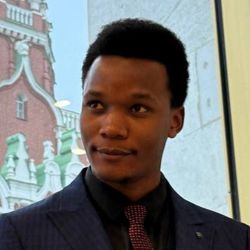
Nama Nama François from Cameroon (bachelor’s in Oil and Gas Engineering, Engineering Academy) became interested in Russia thanks to Russian music and, oddly enough, memes on social media.
“They inspired me to learn Russian,” he said.
The goal of mastering Russian is another significant reason for students from Africa. This was particularly noted by Sossou Arnaud from Benin (graduate student in History of International Relations and Foreign Policy).
“I realized that knowledge of Russian would be useful in my future professional career. And it’s important for me to study at a university with students from all over the world: this develops not only professional skills but also a global perspective,” he said. Knowledge of Russian, along with French and English, increases one’s value in the international labor market, said Boydi Affia Marie-Emmanuel from Côte d’Ivoire (International Journalism).
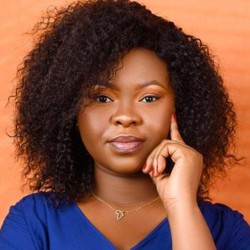
Another reason is the partnership between Russia and African countries. This has led to the emergence of national scholarship programs that allow students to study in Russia for free.
Zakaria Coulibaly from Mali (bachelor’s in Agronomy) stated: “I decided to come to study in Russia because of the good relations between my country, Mali, and Russia. In recent years, Russia has become an important partner for Mali. Therefore, I decided to come here to receive a quality education, acquire new knowledge, and contribute to the development of my country in the future.”
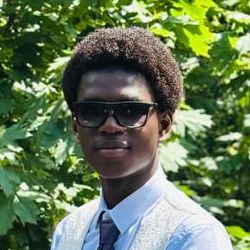
Mosa Petere Bernard from Madagascar also began considering studying in Russia because of a scholarship program in his country. But he was also attracted by the “romance” of the opportunity to travel to a distant land.
“For me, Russia is that ’other world.’ It’s not just about its famous snow and cold, but also its vast territory, the diversity of cultures and peoples, its language and civilization, and its significant role in global geopolitics,” he said.

Oba Jacques Rony, a student from the Republic of the Congo, also began thinking about traveling to Russia thanks to a national scholarship program.
“Our government provides this program to students, giving them the opportunity to study for free,” he said.
Why they choose RUDN University
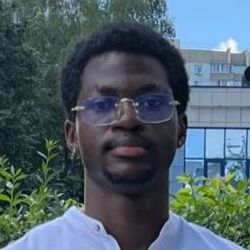
Mosa Petere Bernard from Madagascar said choosing RUDN University was very easy.
“It only takes a little searching: a few keywords, and the university immediately appears on lists of the best universities in Russia and the world,” he said.
Boydi Afia Marie-Emmanuel from Côte d’Ivoire chose RUDN University because it has students from over 160 countries: this diversity helps her build international connections as a future journalist.
Jean-Pierre Sishougi from the Democratic Republic of the Congo also came to RUDN University for the cultural diversity and the opportunity to study with students from around the world. Benicisa Uwera Marie Alice from Rwanda cited the same reasons.
“Here, the whole world meets in one place. As a student from Rouen, I can experience different cultures, build meaningful connections, and transcend my familiar world,” she said.
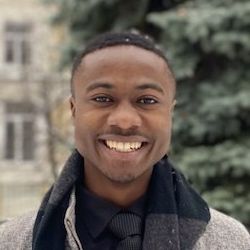
Zakaria Coulibaly from Mali chose RUDN University because it’s an international university with students from different countries.
“Here I can not only get a good education in my field, but also experience new cultures, improve my Russian, and make new friends,” he said.
Nama Nama François from Cameroon chose RUDN University because his relatives are already studying there, and they recommended it to him.
How African students adapt at RUDN University
Jean-Pierre Sishougi from the Democratic Republic of the Congo recalled that RUDN University is a university created to unite students from all over the world.
“And here, studying isn’t just about classes, but also about fellowship. RUDN University has an atmosphere of equality and friendship among peoples,” he said.
Tariku Bedaso from Ethiopia reiterated that the university provides comprehensive support to international students, offering Russian language courses and adaptation programs.
“A friendly community is also important. This makes studying here much easier,” he said.
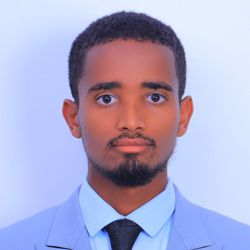
Chinyama Kazombo from Zambia, president of RUDN University Association of African Students (celebrating its 30th anniversary this year), said that most African students report genuine friendliness from their teachers and classmates.
“However, the adaptation process can still be challenging. The main challenges are the difference in education systems, the language barrier, and climate,” he said. “The university is taking significant steps to help overcome these difficulties: pre-university training is available, resource centers for specialized subjects have been created, and a preparatory faculty for the Russian language studies is available.”
At the same time, he noted, difficulties for new students often arise due to a lack of understanding of administrative processes: it’s not immediately clear what the Multifunctional Center is, how the Clinical and Diagnostic Center, or the African Department operates.
“But we are working to make these processes simpler and more understandable for foreigners,” said Kazombo.
How international students live at RUDN University
For 20 years in a row, only students from African countries have held the positions of mayor of RUDN University campus. This is so long that RUDN University officials say, “Our mayors are always African students.”
Sichone Stephen from Zambia is currently studying International Marketing (master’s), and previously studied Agronomy as an undergraduate at RUDN Agrarian and Technological Institute.
“Having come from Zambia, I found here not only a place to gain knowledge but also a space for self-realization. During my years of study, I actively participated in student life: I held leadership positions in the Zambian Students’ Association, participated in cultural and international events, and also won RUDN ATI Mr. Africa 2025 competition,” he said.
In 2026, RUDN University hosted African Culture Week for the 30th time. In 1997, African Culture Week became the first major cultural event of RUDN University’s community associations.
Currently, RUDN University’s African community comprises 44 communities.
“Communities and associations are the soul of the university. They organize cultural festivals, educational workshops, scientific conferences, and, of course, events to help first-year students get acclimated,” noted Chinyama Kazombo. “The most exciting and large-scale events are the sports tournaments. For example, the Football Cup, where teams from Côte d’Ivoire, Nigeria, and the Democratic Republic of Congo traditionally hold very strong positions, is incredibly passionate about the matches!”
The Miss and Mister Africa competitions, which culminate in grand galas, have also become legendary.
Chinyama Kazombo emphasized that African students are very open to Russian culture.
“We actively adopt traditions, everyday habits, and, of course, cuisine — we can no longer imagine life without blini or borscht. At the same time, we proudly share our customs, music, and cuisine with Russian students,” said the ASSAFSTU president. “This exchange takes place through RUDN Interclub, various creative clubs, and our exhibitions. The result of this symbiosis is the formation of a unique multicultural space. We are becoming ’citizens of the world’ who appreciate and respect different traditions while preserving our African identity.”
The International Youth Festival (IYF-2026) was held in Yekaterinburg. For all seven days, RUDN University's stand operated there — a compact model of university life featuring a dorm room, a coworking space, a "kitchen," and multimedia installations. Guests from various countries didn't just learn about Russia's most international university — they tasted a slice of student life firsthand.
A themed train dedicated to the 65th anniversary of RUDN University has been launched in the Moscow Metro! For six months, the train will run along the Sokolnicheskaya Line.
RUDN University staff and alumni received state and departmental awards at the State Kremlin Palace during a festive concert in honor of RUDN 65th anniversary.