




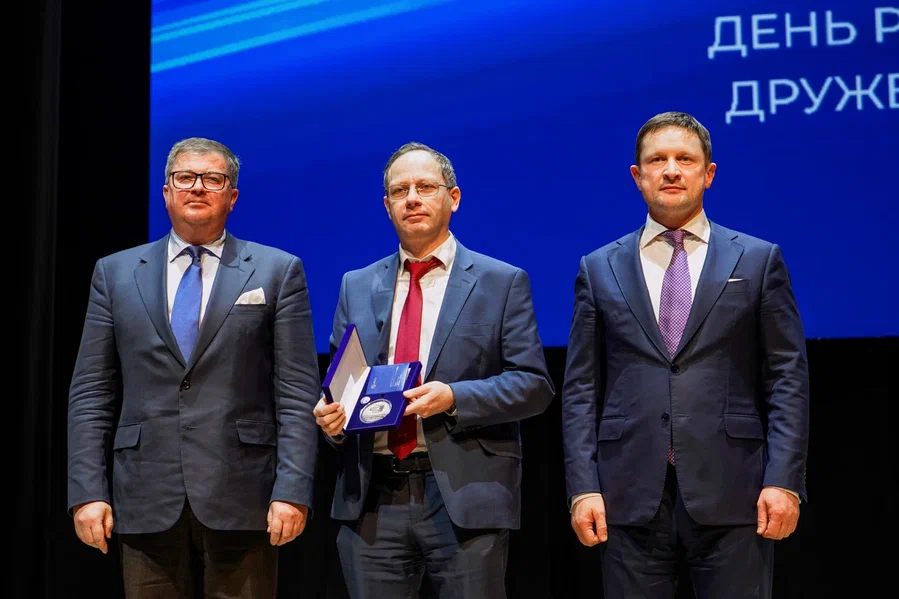
“Fluorine, light, and the life of a molecule”: Alexander Dilman awarded RUDN Prize in Chemistry
The competition was held for the second time. Its first laureate was Cuban scientist Daniel Garcia Rivera, whose research on peptide and protein derivatization and conjugation contributed to the development of important vaccines. This year, RUDN received 27 applications from five countries: China, India, Russia, Oman, and Italy, including submissions from two corresponding members of the Russian Academy of Sciences. The selection committee reviewed the applications, assessing the candidates’ overall achievements, publications, and contributions to the Sustainable Development Goals. To qualify, applicants had to be under 55 years old, not employed by or affiliated with RUDN, and not have collaborated on publications with RUDN scholars in the preceding ten years.
Small atom, big impact
Alexander Dilman, the prizewinner, is a leading specialist in organofluorine chemistry and photocatalysis. His research focuses on developing new methods for the selective introduction of fluorine atoms, difluoromethylene fragments, and trifluoromethyl groups into organic molecules.
Fluorine is a small but extremely influential element. Incorporating it into the structure of a drug molecule can dramatically alter its properties, making a compound more stable, slowing its breakdown in the body, or enhancing its effect against disease. However, inserting a fluorine atom precisely into the right position of a complex organic molecule is akin to performing a delicate surgical operation.
The scientist and his team create versatile tools and building blocks for pharmaceutical chemists. These methods enable the design of new compounds that could serve as the foundation for more effective and safer drugs in the future, for example, treatments for cancer or neurodegenerative diseases.
Turning sunlight into a chemical engine
Alexander Dilman has also discovered several new reactions, such as the interaction of difluorocarbene with organozinc compounds, the thiolation of unactivated carbon-hydrogen bonds using thiyl radicals, and has developed new photocatalytic approaches for generating fluorinated radicals and activating relatively strong chemical bonds.
Photocatalysis uses ordinary visible light to initiate chemical reactions. In the presence of a special catalyst (a substance that accelerates the reaction), light becomes a powerful and environmentally friendly tool. It allows complex molecular transformations to be carried out more simply and cheaply compared with traditional methods.
The high international recognition of Alexander Dilman’s work is reflected in numerous awards, including the RAS Medal for Young Scientists in 1999 and the prestigious Liebig Prize of the German Chemical Society in 2019. In 2025, he was also awarded the Medal of the Order “For Merit to the Fatherland” II Class.
Sergey Ivanov, a scholar from St. Petersburg, has been named the first winner of RUDN University’s International Prize for Scientific Achievements in Mathematics, worth 5 million rubles.
Products derived from microalgae represent a cutting-edge development in the field of bioeconomy. The potential of this biological resource was discussed at the international research seminar “Foundations for a Green Sustainable Energy”, part of the BRICS Network University’s thematic group on “Energy”. The event was organized by the Institute of Ecology at RUDN University.
Ambassadors of Russian education and science met at a conference in RUDN University to discuss how they can increase the visibility of Russian universities and research organizations in the world, and attract more international students in Russia.