




RUDN University Biologist Outlined the Molecular Mechanisms of Herbal Extracts in Fish
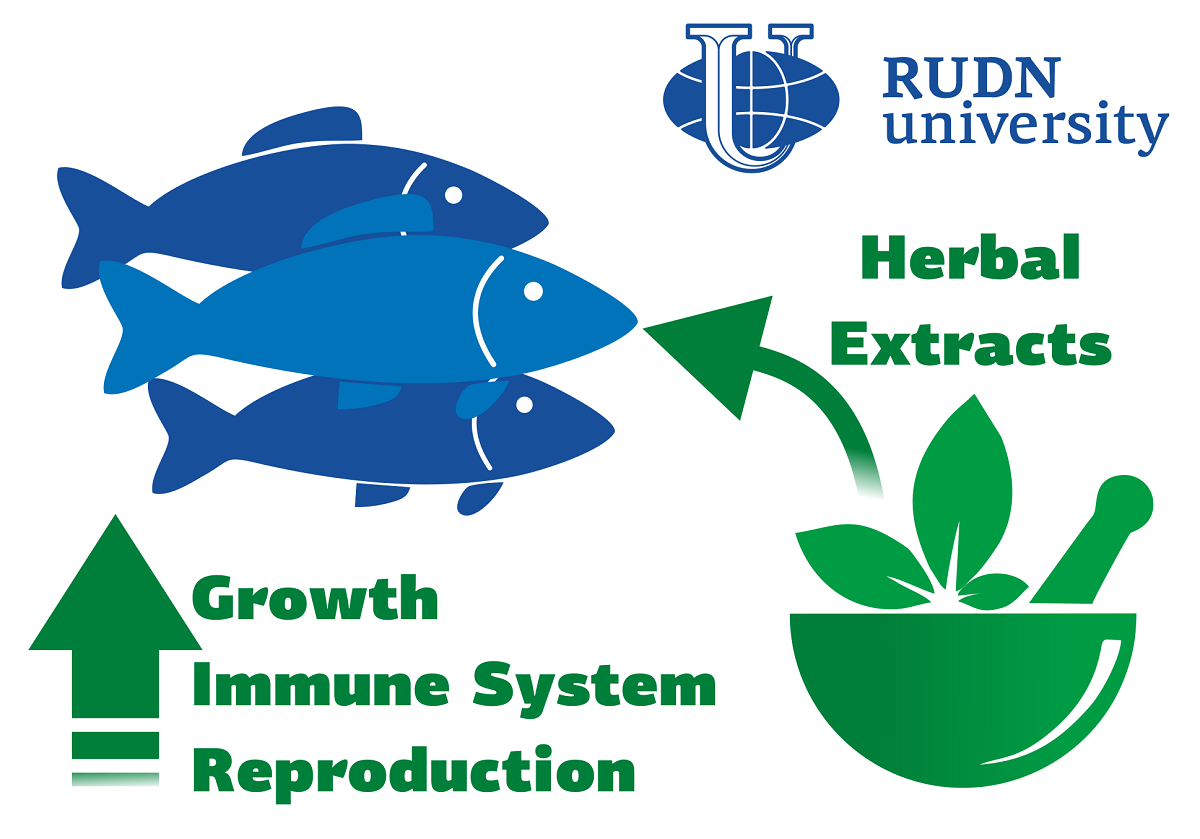
One of the main tasks when breeding fish is to maintain their health. Synthetic drugs can cause undesirable side effects and be harmful to the environment. Scientists offer natural drugs, but little is known about how they affect fish at the molecular level. The RUDN University biologist together with colleagues from Egypt, Italy, Iran, Canada, Thailand and Turkey collected research data on this topic and summarized their results.
“Medicinal herbs and their extracts have a diverse effect on the processes in the body of aquatic animals. These natural compounds, when added to the fish diet, can affect growth rates, and stimulate the immune system, and they can reduce oxidative stress. However, the exact mode of action of these supplements is still not well described. Considering that studies at the molecular level can provide an accurate understanding of how feed additives work, we have collected the results of studies on the effect of herbs on the expression of various genes in fish,” said Morteza Yousefi, PhD, Associate Professor, Department of Veterinary Medicine, RUDN University.
The researchers selected more than 100 articles that examined the effects of herbal supplements on the production of genes related to immunity, digestion, growth, and the reproductive system.
Scientists have concluded that growth is stimulated by herbal supplements due to increased expression of genes gh, igf, muc and some others. This occurs through interaction, for example, with tannins (a group of phenolic compounds), curcumin (which is part of the turmeric root), limonene (a hydrocarbon from the terpene group). Among the herbal preparations that affect the immunity of fish, scientists have identified several plant families. For example, Moringaceae secrete carotenoids, flavonoids and xanthins, which help to increase phagocytosis (capture of foreign particles), increase the level of peroxidase. The effect of herbal supplements on the reproductive system goes through a change in the level of hormones released by the hypothalamus, pituitary gland and gonads
“Secondary plant metabolites can stimulate immunity through innate and adaptive immune responses and trigger immune cell activity, enhance phagocytosis, and secrete inflammatory markers to resist various pathogens. They show promising results in most studies and have low toxicity, and therefore can be recommended as a preventive and therapeutic measure for aquaculture. We also revealed the direct and indirect actions of herbal extracts and phytochemicals on the reproductive axis (mainly steroidogenic pathways) in vertebrates, suggesting a potential pathway for future research,” said Morteza Yousefi, PhD, Associate Professor, Department of Veterinary Medicine, RUDN University.
The results are published in Animals.
In the last five years, academic staff of RUDN alongside the Chinese universities and research centers has achieved impressive results. More than 1,000 scientific publications were made jointly in a wide spectrum from engineering and technology to medicine and social sciences. 19 of these materials were published in top-rated journals which verifies that the works were world-class level.
RUDN University has been included among the leaders in the BRICS ESG University Ranking among 65 leading universities. They were assessed on 20 criteria, ranging from education and research to environmental and social agendas.
At a meeting of the new RUDN University Dissertation Council in the specialties of 2.1.12 “Architecture of Buildings and Structures. Creative Concepts of Architectural Activity” and 2.1.11 “Theory and History of Architecture, Restoration and Reconstruction of Historical and Architectural Heritage”, three postgraduate students — Natalia Kalinina, Evgeny Ogienko, and Yulia Loginova — were awarded PhD degrees in Architecture for the first time in the university's history.