


“To Inspire the Search for Root Causes”: How Africa and RUDN University are Advancing Science
The total volume of publications over 10 years is 884 works, with an average of 44.23 citations per publication, which indicates recognition of the works by the scientific community and their significant impact on the field of research. The field-weighted citation index (FWCI, which shows how an article is cited relative to other publications in the same scientific field) is 2.61. This is 161% above the global average.
Responding to Africa's Needs
Since 2017, the frequency of Russian-African joint research involving RUDN University has been growing steadily. The largest number of such works was published in 2025 - 127. The data for 2026 - so far 113 publications.
"Any education system and field of scientific inquiry depends on the realities and needs of its country: cultural-historical, socio-economic and political," noted RUDN University President Vladimir Filippov. "And the interests of African countries in the scientific sphere can be seen from our joint publications. They are devoted, in particular, to carbon dynamics in soils of agroecosystems, plant protection and food security, structural chemistry of crystals, architecture of telecommunications systems, and boundary value problems for differential equations."
Thus, since 1997, 42 publications have been prepared in the field of carbon dynamics in soils of agricultural systems. Here, in particular, representatives of Egypt and Kenya are most active. In addition, more than 30 publications have been released in the field of control of wave equation systems, with partners from Algeria, in particular, participating in their creation. In the field of fundamental chemistry, 22 works have been published on the topic "Hydrogen bonds and complexation in crystals." Here the main partners are Ethiopia and Cameroon.
A similar number of publications (22) was devoted to resource management in software-defined networks. In the field of IT and telecommunications, Egypt most often acts as RUDN University's partner. Also in the top 5 by frequency of scientific publications is the topic of research at the intersection of IT and chemistry: "Machine learning in the analysis of crystal structures." Over 10 years, 21 such works have been published. RUDN University scientists work together with colleagues from 28 African countries.
The largest number of publications was produced jointly with Egypt - 355. The "top ten" also includes Algeria (119), Nigeria (79), Ethiopia (55), South Africa (53), Morocco (52), Tunisia (40), Cameroon (31), Sudan (14), Zambia and Libya (13 each). Most cited topics Articles in the areas of "General Medicine," "Life Sciences and Medicine," "Natural Sciences," "Engineering and Technology," and "Social Sciences and Management" were cited most often.
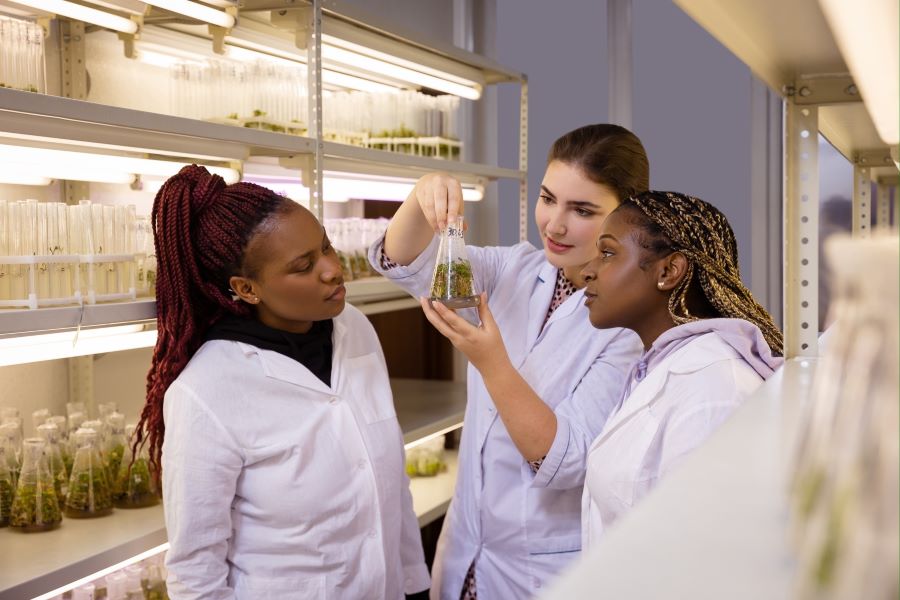
Тhe Most-Cited Research Papers
RUDN University Vice-Rector for Strategic Communications Elena Apasova noted that at least 10 joint publications with African colleagues are among the top 1% most cited works in the world.
The most popular scientific article over ten years (about 450 citations), published in co-authorship by scientists from RUDN University and Africa, was a review on the impact of drought on changes in the carbon and nitrogen cycle in the planet's natural ecosystems. It was published in the journal Earth-Science Reviews in 2021. From RUDN University, the work was led by soil scientist Yakov Kuzyakov of the Agrarian and Technological Institute; from Africa, by Dong-Gill Kim of Hawassa University in Ethiopia.
The scientists studied the response of carbon and nitrogen cycles to drought in experiments on reducing precipitation in three main types of natural ecosystems: forests, shrublands, and grasslands. They established that the impact of drought on carbon and nitrogen cycles in soil is determined by the type of ecosystem and the duration and intensity of the dry period. It is soil science that is the most cited topic of joint works by scientists from Africa and RUDN University.
Thus, in 2024, the journal Science published a study devoted to inorganic carbon reserves in the world's soils, their distribution and vulnerability. Among the 27 authors are Igor Savin of RUDN University's Institute of Ecology and Heba Elbasiouny of Al-Azhar University in Cairo (Egypt). The scientists recalled that over the next 30 years, soil acidification caused by nitrogen input into terrestrial ecosystems will lead to a reduction in soil inorganic carbon reserves, and presented an analysis whose data show that annually at least 1.13–0.33 billion tons of inorganic carbon are carried from soil into inland waters, which also affects the dynamics of carbon in the atmosphere and hydrosphere.
In 2023 and 2024, works were published devoted to assessing organic carbon content in the soils of southern Egypt using satellite data and machine learning methods. And in 2024, the same methodology for analyzing data in Sudan was used by Ibrahim Mohammed Abdalla Alsharif, senior lecturer at the Department of Subsurface Management and Oil and Gas Engineering of RUDN University's Engineering Academy, and his co-authors.
Saving Native Lands
At RUDN University, the topic of food security is becoming an important point of contact between university science and the specific tasks of African countries. In the dissertations of RUDN University students from Africa, the topic of preserving agricultural land and grain crops regularly appears. And among young scientists it is especially popular (over the past 10 years, more than 50 young scientists, students, and postgraduates from 26 African countries have participated in RUDN University scientific projects).
For example, Simbo Diakite from Mali devoted his scientific work to protecting spring grain crops from fungal diseases. "Mali annually consumes over 365,000 tons of wheat, while domestic production covers only about 12% of this need. Grain imports cost the country more than $130 million a year, and crop losses associated with plant diseases in some cases can exceed 60%," he described the problem.
In May 2023, Simbo Diakite's project "Development of technologies for protection against diseases of new wheat varieties for cultivation in countries and regions with a hot climate" received a first-degree diploma and a commemorative medal at the international festival "Clear prop." And in 2025, he defended his PhD dissertation "Phytosanitary monitoring and protection of spring grain crops from fungal diseases in the conditions of the Non-Black Earth Zone of the Russian Federation." In addition, Simbo Diakite studied how greenhouse gas emissions affect rice production.
In a publication for the African journal Significance Africa, he drew attention to the potential of local agricultural crops adapted to the conditions of the continent: introduced crops — wheat, rice, corn, potatoes — require certain growing conditions, and these are difficult to provide in a changing climate.
"Africa can quite solve the problems of food insecurity and malnutrition from which the continent suffers simply by turning to local crop species adapted to local environmental conditions," the scientist noted.
RUDN University postgraduate student and lecturer Nelson Onyebuchi Nwobi from Nigeria is trying to understand how to solve an urgent environmental problem in his country. He came from its southeastern part, Anambra State, where gully erosion destroys territory and floods often occur. The result is soil depletion and loss of agricultural land.
"Awareness of how environmental problems threaten local communities and their existence inspired me to search for the root causes of what is happening and to develop practical, scientifically grounded solutions," the scientist explained.
In Nigeria, Nelson Onyebuchi Nwobi received a bachelor's degree in geology, and then studied in RUDN University's master's program "Ecology and Nature Management." He is now concurrently completing another master's program "Disaster Risk Management" at Ahmadu Bello University in Nigeria.
Nelson Onyebuchi Nwobi's research is devoted to gully erosion and environmental degradation in the Idemili River basin in southeastern Nigeria and its impact on soil health and biodiversity. He uses satellite remote sensing, geospatial analysis, and machine learning to study erosion susceptibility, as well as changes in land use and vegetation cover. With the help of field studies and laboratory analyses, including X-ray diffraction, X-ray fluorescence, and particle-size analysis, he determines how erosion affects soil properties and surrounding ecosystems.
At the same time, the scientist is studying the influence of subsurface morphodynamics on gully evolution: how groundwater movement and the formation of soil pipes can contribute to their growth.
"Understanding only surface features may not fully explain why some landscapes are especially vulnerable to severe erosion," he explains. In addition, Nelson Onyebuchi Nwobi conducted a comparative study of vegetation dynamics in the savanna of Borno and Yobe states in Nigeria and part of the Black Sea-Caspian steppe in Kalmykia. "The goal was to establish quantitative threshold values that can serve as empirical baseline indicators for assessing the vulnerability of specific biomes and improving understanding of potential ecosystem degradation under climate change," he explains.
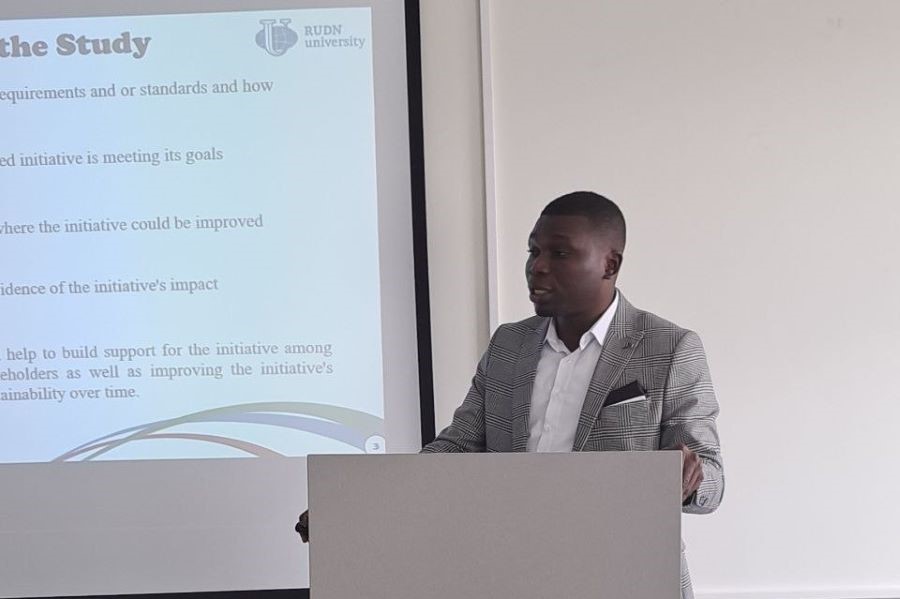
Yaser Rebukh, associate professor of the Department of Rational Nature Management at RUDN University's Institute of Ecology (he graduated from Bordj Bou Arreridj University in Algeria and defended his dissertation at RUDN University), while his colleagues from Tanta University (Egypt) conducted an experiment on soils contaminated with copper, zinc, and lead. The scientists found that the water fern azolla (a small plant that lives on the surface of water) can improve soil fertility, reduce the content of toxic metals, and increase rice yield. This work appeared in the journal PLOS One in 2026, and publication of the article was supported by RUDN University's grant system for scientific projects.
Parfait Kezimana from Burundi, who graduated from RUDN University and defended his dissertation "Polymorphisms of genes of the FAD, SAD, and UGT families and their role in determining the fatty acid composition of oil and the content of lignans in flax seeds," today works at the university as an associate professor, leading researcher, and head of the laboratory of the agrobiotechnological department. In postgraduate studies, Parfait Kezimana and colleagues studied a collection of 84 flax varieties and lines and analyzed the sequences of genes associated with the composition of flaxseed oil.
The scientists determined which polymorphisms affect the content of various fatty acids and established which genetic variants can be used to create markers and subsequently breed new varieties.
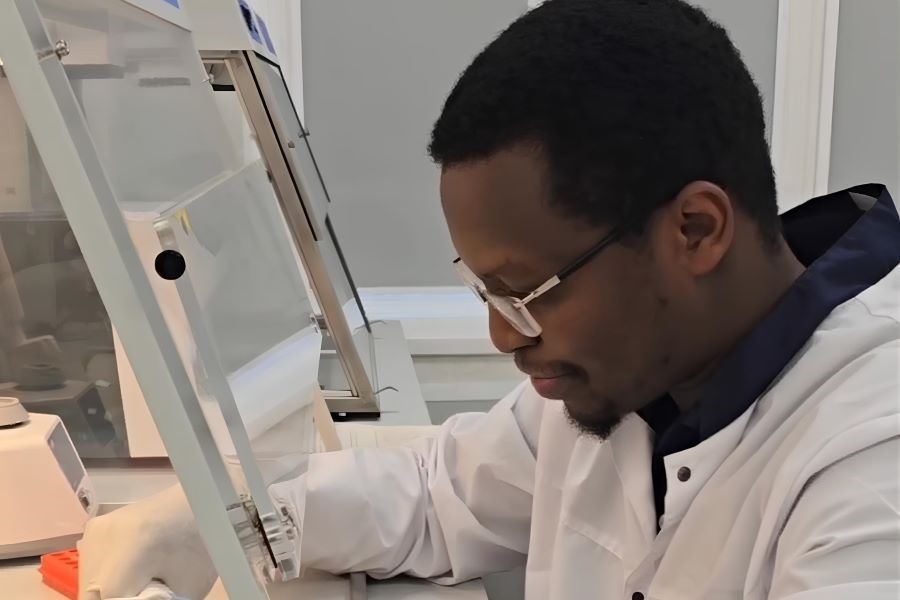
Medicine, Mathematics, Society
For Russian and African scientists, RUDN University is becoming a space that turns challenges into a subject of systematic scientific research. For example, in 2020, the journal Molecular Neurobiology published a review devoted to the role of oxidative stress in autism spectrum disorders (ASD). Its authors are Alexey Tinkov, professor of the Department of Medical Elementology at RUDN University, Anatoly Skalny, head of the Department of Medical Elementology at RUDN University, and their Egyptian colleagues — Nagwa Abdel Meguid, Mona El-Bana, and Maha Hemimi from the National Research Center in Giza and Khaled Saad and Amira El-Houfey from Assiut University.
This study, which has been cited about 330 times, is based on data according to which an elevated level of oxidative processes may influence the development of ASD. The scientists consider which biomarkers can be used for early diagnosis of ASD and assessment of the effectiveness of therapeutic interventions, as well as for substantiating and selecting pharmacological or nutraceutical treatment methods.
In January 2026, Valerien Baharane from Rwanda defended his work "Assessment of air pollution levels and its impact on human health in East African countries." In May of the same year, Robinson Tsimin Andriamanoueri (Madagascar) presented his dissertation "The role of comprehensive assessment of biomarkers of kidney damage, natriuresis, and venous congestion in optimizing the management of patients with acute decompensation of chronic heart failure."
Mathematicians also make a huge contribution to solving public health problems. Thus, scientists from RUDN University and their colleagues from Algeria understood how an infection wave spreads in a population. They developed a "reaction-diffusion" type model describing the initial spatial dynamics of viral infection in tissues and described the role of innate immunity feedback mechanisms in the dynamics of the infectious process. Depending on the values of the virus replication coefficient and the strength of the immune response, the infection can be suppressed immediately, or spread with subsequent gradual attenuation, or steadily spread in the tissue as a wave. The authors of the work are Vitaly Volpert, director of the interdisciplinary scientific center "Mathematical Modeling in Biomedicine" at RUDN University, Anastasia Mozokhina, junior researcher at the S.M. Nikolsky Mathematical Institute of RUDN University, and their colleagues from the Higher Normal School in Algeria, Meryem Bouzari and Latifa Ait Mahiout.
RUDN University's African agenda in studies of society, state, and law is represented by several large projects supported by the Russian Science Foundation. Each of them is based on concrete practical significance and the applied nature of the research - this approach unites humanities scholars with their colleagues in the natural sciences. For example, the project "Peacekeeping in Africa: Trends and Vectors of Development," headed by Svetlana Bokeriya, associate professor of the Department of Theory and History of International Relations of the Faculty of Humanities and Social Sciences at RUDN University.
At the start of the project in 2023, 7 of the 12 peacekeeping operations active in the world were in Africa. In 2024, in the monograph "Peacekeeping in a Multipolar World," the researchers conclude that there is a need for a gradual transition from UN missions to regional operations. Thus, under UN leadership worldwide in 2000–2020, 35 peacekeeping operations were conducted, while the number of operations conducted by African countries during this period was 38.
In total, of the 884 articles created by Russian and African scientists over 10 years, 56% are fundamental in nature. Applied research, as a rule, is devoted to the Sustainable Development Goals and is aimed mainly at achieving the following tasks:
- Good health and well-being
- Zero hunger / Agriculture
- Affordable and clean energy
- Conservation of marine ecosystems.
In the last five years, academic staff of RUDN alongside the Chinese universities and research centers has achieved impressive results. More than 1,000 scientific publications were made jointly in a wide spectrum from engineering and technology to medicine and social sciences. 19 of these materials were published in top-rated journals which verifies that the works were world-class level.
RUDN University has been included among the leaders in the BRICS ESG University Ranking among 65 leading universities. They were assessed on 20 criteria, ranging from education and research to environmental and social agendas.
At a meeting of the new RUDN University Dissertation Council in the specialties of 2.1.12 “Architecture of Buildings and Structures. Creative Concepts of Architectural Activity” and 2.1.11 “Theory and History of Architecture, Restoration and Reconstruction of Historical and Architectural Heritage”, three postgraduate students — Natalia Kalinina, Evgeny Ogienko, and Yulia Loginova — were awarded PhD degrees in Architecture for the first time in the university's history.