




RUDN University lecturer won the Kolba Prize for women scientists for her contribution to economic science
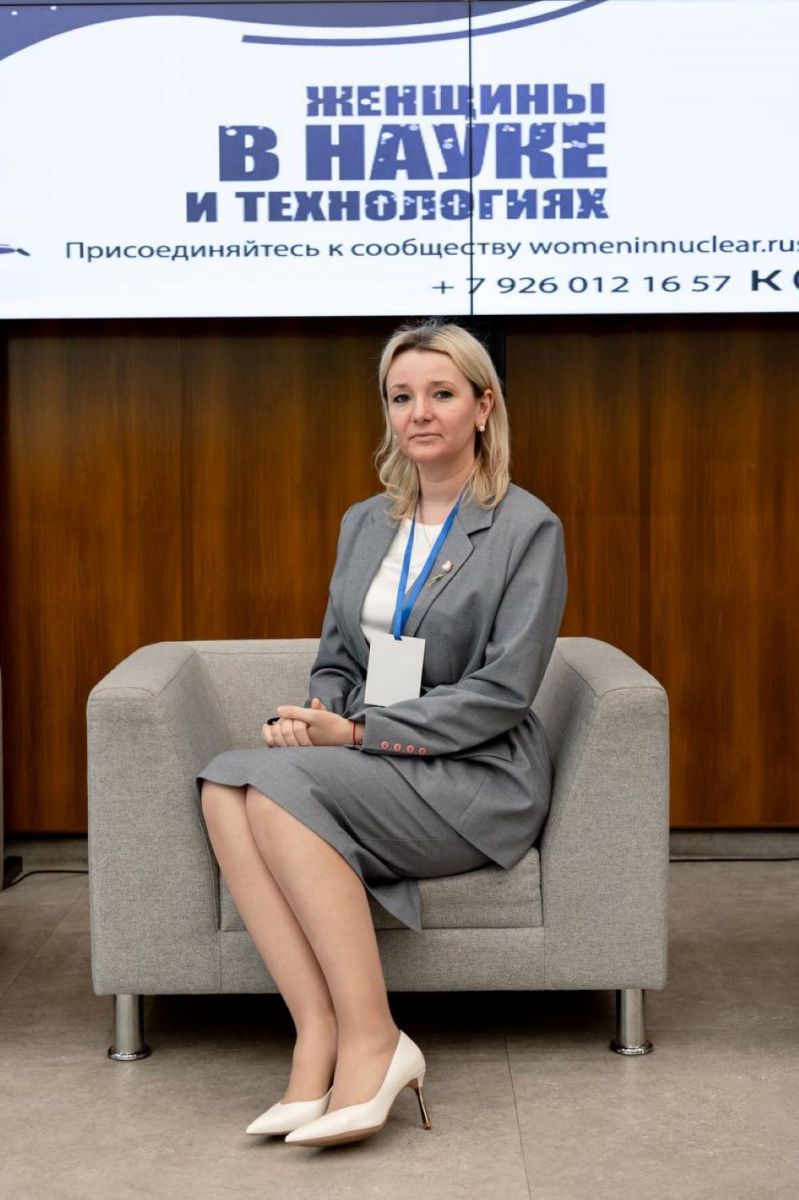
How significant is it for you personally to receive the Kolba Award?
“‘Kolba’ confirms the relevance and practical significance of the research on improving the integrative management of priority innovation projects in industries critical for Russia's technological sovereignty. The novelty of the research is in the development of new economic tools to improve the efficiency of innovation project management, the creation of a mechanism for management decision-making and the introduction of an intelligent system based on digital technologies. This improves innovation management in conditions of instability and technological change.”
What challenges do women scientists face in your field and how can they be overcome?
“In economic science, women often face a lack of visibility for their achievements. Often, we combine scientific work with family responsibilities. And in the process, we are faced with the need to prove our competence. These challenges can be overcome in a systematic way: developing programmes to support women in science, increasing their representation in expert and managerial structures, and creating flexible conditions for combining a scientific career and personal life.”
What advice would you give to female students who want to pursue a career in science?
“Believe in your strengths, don't be afraid of challenges and start doing research as early as possible. It is important to find mentors to support you at the start and to constantly expand your knowledge, including digital skills. And, of course, you need to be prepared for the fact that the path in science requires perseverance, patience and a genuine interest in what you are doing.”
What areas in economics and customs do you consider the most promising for young researchers?
“Anything related to the digitalisation of the economy, the development of high-tech industries, intelligent project management systems and mechanisms to ensure technological sovereignty. In the field of customs, the development of digital platforms for optimising customs procedures and analysis of global logistics chains using big data and artificial intelligence methods.”
Imagine a world where everyone has enough food, clean water, access to education, and decent work. A world where nature is protected and the future of our planet is cared for. These are the Sustainable Development Goals—to achieve a sustainable future for all! To this end, in 2015, the United Nations (UN) defined 17 Sustainable Development Goals (SDGs). The SDGs are a global plan that helps countries and people work together towards a better future. All 193 UN member states have joined the plan.
Researchers from the Faculty of Artificial Intelligence at RUDN University conducted a large-scale study that revealed systemic errors in large language models (LLMs) when diagnosing depression based on text. This work, carried out in collaboration with colleagues from AIRI, Federal Research Center “Computer Science and Control” of the Russian Academy of Sciences, Ivannikov Institute for System Programming of the Russian Academy of Sciences, Moscow Institute of Physics and Technology, and MBZUAI, not only identifies the problem but also lays the foundation for the creation of more reliable and secure tools for detecting depression and anxiety.
Alexandra Sentyabreva, a junior researcher at the Laboratory of Cell Technologies and Tissue Engineering at RUDN Research Institute of Molecular and Cellular Medicine at the Russian University of People's Friendship, won the competition for young scientists at the All-Russian Scientific Conference “Topical Issues of Morphogenesis in Norm and Pathology.” She was awarded the Academician A.P. Avtsyn Prize.
Imagine a world where everyone has enough food, clean water, access to education, and decent work. A world where nature is protected and the future of our planet is cared for. These are the Sustainable Development Goals—to achieve a sustainable future for all! To this end, in 2015, the United Nations (UN) defined 17 Sustainable Development Goals (SDGs). The SDGs are a global plan that helps countries and people work together towards a better future. All 193 UN member states have joined the plan.
Researchers from the Faculty of Artificial Intelligence at RUDN University conducted a large-scale study that revealed systemic errors in large language models (LLMs) when diagnosing depression based on text. This work, carried out in collaboration with colleagues from AIRI, Federal Research Center “Computer Science and Control” of the Russian Academy of Sciences, Ivannikov Institute for System Programming of the Russian Academy of Sciences, Moscow Institute of Physics and Technology, and MBZUAI, not only identifies the problem but also lays the foundation for the creation of more reliable and secure tools for detecting depression and anxiety.
Alexandra Sentyabreva, a junior researcher at the Laboratory of Cell Technologies and Tissue Engineering at RUDN Research Institute of Molecular and Cellular Medicine at the Russian University of People's Friendship, won the competition for young scientists at the All-Russian Scientific Conference “Topical Issues of Morphogenesis in Norm and Pathology.” She was awarded the Academician A.P. Avtsyn Prize.