




Ministry of Digital Development Grant and the Top AI Program: How RUDN Faculty of Artificial Intelligence Trains Future Specialists
Two academic tracks in one program: interdisciplinarity as a core principle
Most programs are designed within a single field of study. Artificial intelligence, however, requires top-level specialists to possess both a deep understanding of mathematical foundations of the models and the ability to apply this knowledge to real-world challenges. For this reason, RUDN Faculty of Artificial Intelligence adopted an unconventional approach: the program is based on two tracks simultaneously: "Fundamental Informatics and Information Technologies" (02.03.02) and "Applied Informatics" (09.03.03). This format was also supported by the faculty’s key industry partner, X5 Group, which ensures that the technological stack reflects current market demands.
What does this mean for students? The curriculum is designed so that every theoretical module is complemented by practical applications. A solid mathematical foundation – linear algebra, discrete mathematics, and probability theory – is combined with data processing tools. The study of algorithms and data structures goes hand in hand with production programming languages such as Python and C++, as well as development tools including Git and Docker. Modules on machine learning and neural networks cover both theory of architecture and real industry cases. Databases, Hadoop, and Spark are studied alongside ontologies and knowledge graphs. As a result, graduates master the entire cycle – from the mathematical justification of model selection to industrial deployment. These are precisely the Data Scientist level competences that are currently in high demand.
Immersion in the profession from the first year of studies
The traditional model of “two years of general studies followed by specialization” cannot be applied here. From the first semester, students study mathematics, programming focused on data processing tasks, and introduction to AI. In the second semester, they take "Artificial Intelligence and Cognitive Psychology" course. Specialized subjects make up 65% of the first-year curriculum. By the end of their first year, students not only understand the theory but can also write code, analyze data, and implement basic AI algorithms. Most importantly, they are already prepared to participate in hackathons and case championships.
During the past academic year, more than ten events involving major industry players were organized for first-year "Top AI" students. These included open lectures by X5 Group, Yandex, and Cloud.ru; workshops by HeadHunter (“Configuring and Executing Queries in Distributed Databases" and "Optimization Pitfalls"); hackathons such as CodeGryphon by "Self Soft Production" and "Hackathon – Your First Step into IT" organized by MEPhI; and career meetings with Gazprombank.tech, GID Gazprom, and the Government Commission of the Russian Federation. Special attention should be given to interregional projects: the IT Festival in the Republic of Ingushetia (supported by the "Solvo" NGO) and the youth track of the AI in medicine conference in Arkhangelsk (held jointly with Northern State Medical University), where students not only attended sessions but also presented their own projects. Dozens of students took part, and first-year participation overall exceeded 150.
Individual learning pathways: every student chooses their own track
The program offers a personalized learning system. From the first year, students select elective modules from groups of two or three courses, ranging from "Fundamentals of Robotics" and "Digital Twins" to "Recommendation Systems" and "Generative Models". In total, the curriculum includes seven elective blocks. After the second year, students choose between two advanced professional tracks: "Computer Vision" (CV) or "Natural Language Processing" (NLP). Each track concludes with a major project module worth 14 credits, during which students work on complex tasks proposed by industry partners. X5 Group, for example, contributes retail-related cases, including product recognition, review analysis, and demand forecasting. This flexibility enables graduates to pursue careers not only in traditional Data Science but also in highly specialized areas that are only beginning to emerge in the market.
What does the grant provide and why does it matter?
The Ministry of Digital Development grant within the "Top AI" project has enabled RUDN Faculty of Artificial Intelligence to create not just an educational program, but a full-fledged environment for training highly qualified specialists. This includes a curriculum that integrates two fields of study (a rare model in Russia), early participation in professional competitions, systematic cooperation with X5 Group, and opportunities to involve practitioners from leading companies in teaching. Thanks to the grant, students participate in real case projects from their first year, attend regional IT festivals, complete internships at companies, and graduate with substantial project portfolios rather than just a diploma. More than 150 students enrolled in the program in 2025, and the results of the winter exams confirm the quality of training: 78% passed all exams on time, while another 20% cleared their academic arrears within the established deadlines.
“The grant allowed us to achieve what is usually challenging within the traditional educational system: to remove the barrier between students and real business challenges. From their first year, students see not only formulas but also how these formulas become products used by people. They already participate in hackathons and festivals and communicate with top managers of major companies, because we believe that learning should not take place in isolation, but within the industry itself,” said Anton Poddubskiy, Dean of RUDN Faculty of Artificial Intelligence.
The Faculty of Artificial Intelligence continues admissions to the bachelor’s program "Artificial Intelligence: Development and Training of Intelligent Systems" ("Top AI" project, Data Scientist level), supported by the Ministry of Digital Development grant. If you want not only to study AI, but to become a top specialist capable of creating intelligent systems from scratch, join us. The future starts here. For more information about admission to RUDN University, please visit the Admissions Office website.


The Academy of Engineering is entering a new stage of development with the launch of four large-scale strategic initiatives. The projects include the establishment of new Base Departments in partnership with leading companies, setting up unique creative laboratories, and strengthening the Academy’s workforce capacity. Together, these initiatives are designed to reinforce the University’s position as a center of excellence in engineering and the arts, and bring together advanced technologies, fundamental science, architecture, monumental art, and the practical needs of the Russian economy.
Students and researchers of RUDN University regularly become winners and prize-winners of national and international competitions, scientific conferences and Olympiads, receiving awards from various governmental departments. Here are some of the university’s most remarkable achievements of this summer.
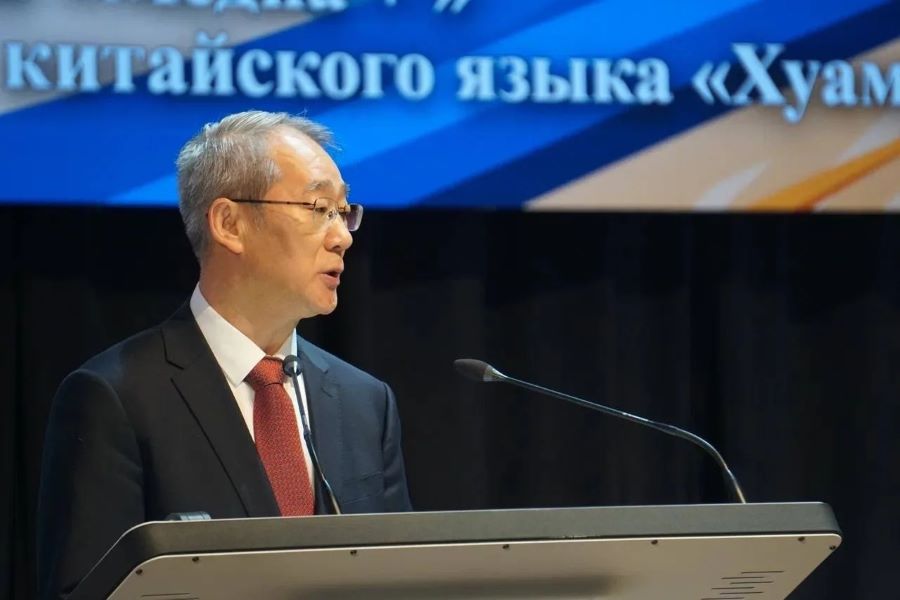
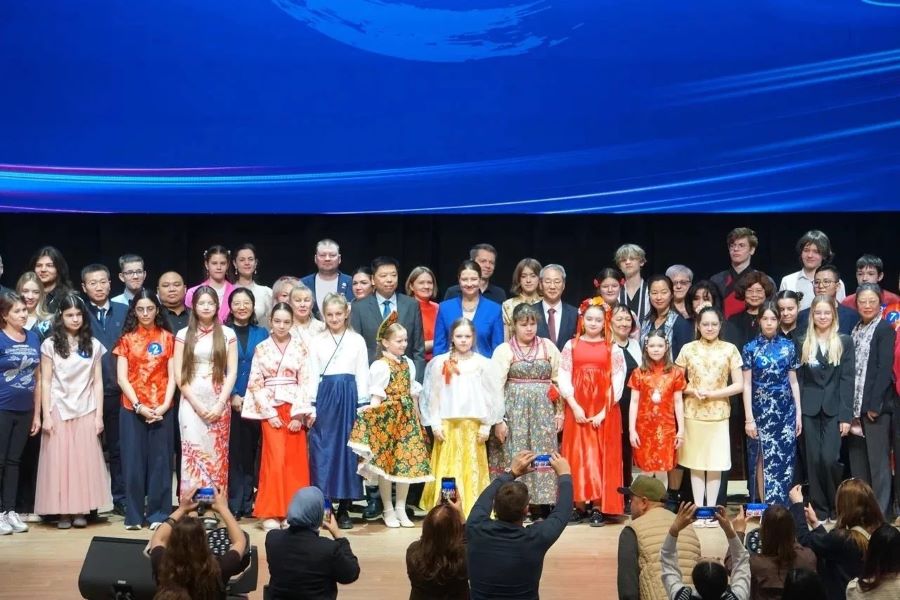
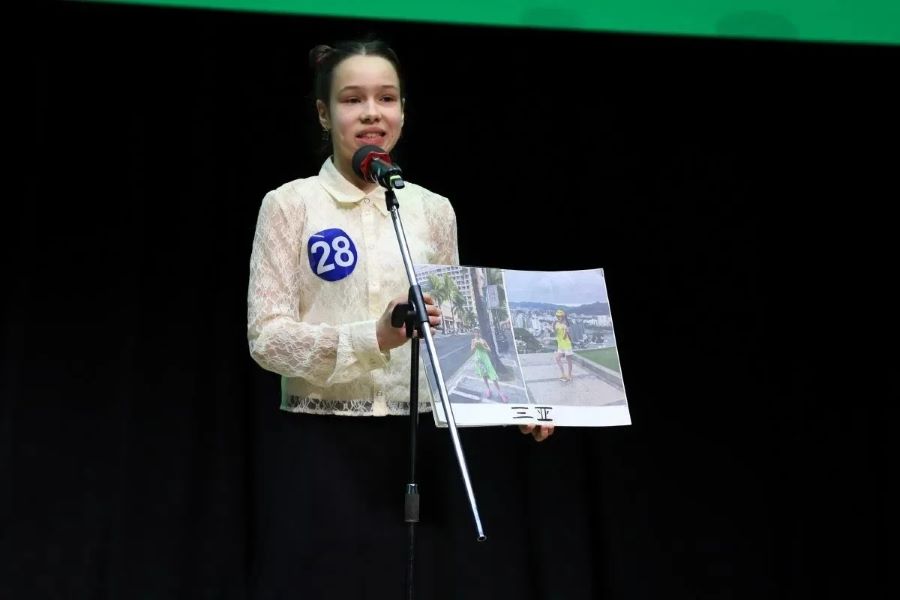
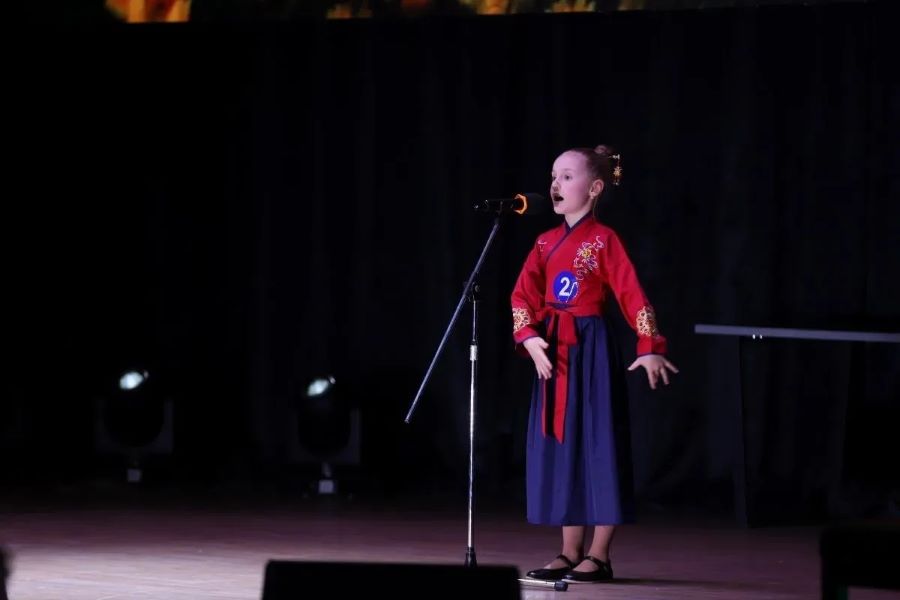
On April 25-26, RUDN University hosted the Moscow qualifying stage of the XIV All-Russian “Chinese Bridge” Competition. One of the most prestigious contests brought together 288 Moscow schoolchildren, who demonstrated their knowledge of Chinese language, culture and traditions.