




Awards, Departmental Medals and Innovative Developments: RUDN Students and Researchers Celebrate Summer Achievements
Sber Science Award
A team of RUDN students took part in the "NCFD Development Laboratory of the Future" project session in the "Smart Resort. Services of the Future" track. In a limited time, they developed the concept of a single digital ecosystem for resorts of the North Caucasus, which unites booking, navigation and guest interaction services.
Based on the results of the work, the team was awarded a special Sber Award in "The Most Innovative and Promising Project" nomination.
The team included:
- Nataliya Zlatovchena;
- Daniil Silin;
- Bogdan Shevchenko;
- Svyatoslav Bychai;
- Aleksei Gorshkov;
- Karolina Rozinova.
The team was supervised by Olga Zeveke.
Victories at the “I Am a Professional” Olympiad
The team from the RUDN Department of Construction Technologies and Structural Materials showed high results in the 9th All-Russian Student Olympiad "I am a Professional". Based on the results of the final round, students from RUDN Academy of Engineering won gold and silver medals and achieved the status of winners in the "Construction" track.
The list of RUDN students recognized in the competition:
- Serafim Zagorodniy (master's student) – gold medal;
- Insaf Galiev (master's student) – silver medal;
- Evgeniy Nezhurin (bachelor's student) – winner;
- Dmitriy Vyborniy (bachelor's student) – winner.
Anastasiya Banakhovich, a student of RUDN Faculty of Economics, became a bronze medalist in the "Creative Industries" track of the "I am a Professional" Olympiad.
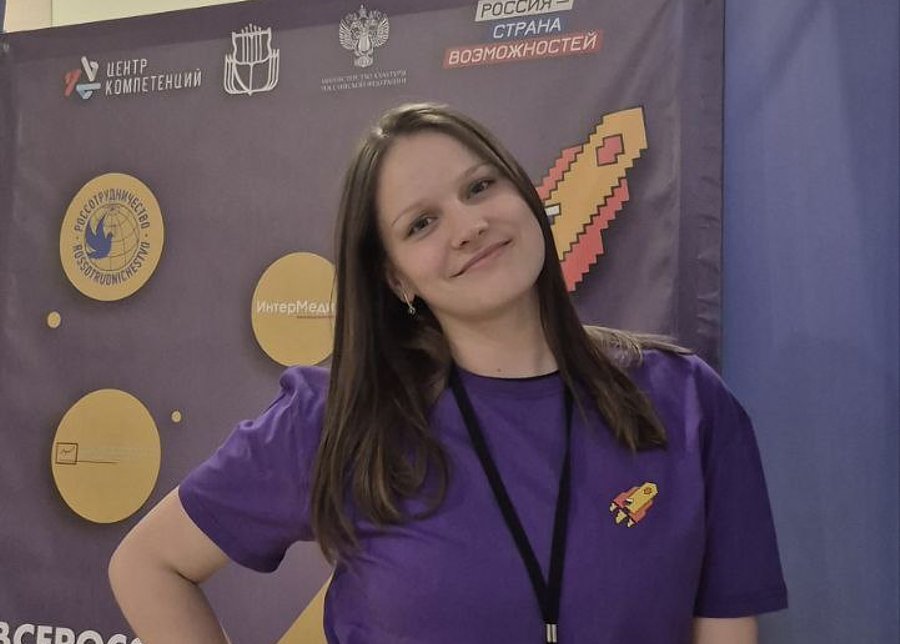
For her, the most exciting part of the competition was the final round. It was held in Khimki at the Moscow State Institute of Culture and the Museum of Oriental Art. The individual task came as a surprise: participants had to do a livestream directly at the museum halls. Choosing either a single exhibit or an entire exhibition hall, they were required to present it from the perspective of Russia’s cultural heritage, keeping the viewer's attention by combining art historical analysis with a lively dialogue.
The fact that Anastasiya comes from Kazakhstan helped her to complete the task with a maximum score.
"I chose exhibits connected with the culture of Central Asia and drew parallels between the oriental patterns, which I've known since my childhood, and their place in Russian cultural code. Eastern culture is familiar and meaningful to me – it has surrounded me since I was a child. I'm not just interested in it – I live it, feel its rhythm and understand its symbolism. This background allowed me to turn the livestream into a fascinating trip rather than a boring lecture," said Anastasiya Banakhovich.
Robotics programming
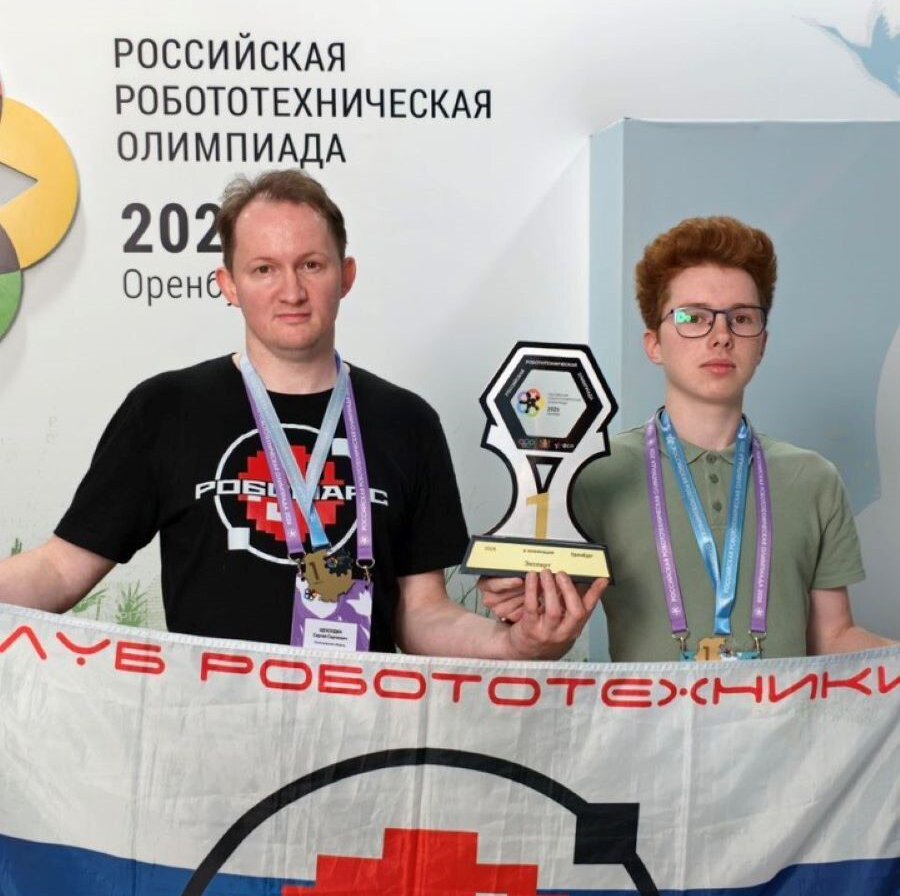
Egor Myasnikov, a student of RUDN Faculty of Artificial Intelligence, studies on a grant provided by the Ministry of Digital Development, Communications, and Mass Media of the Russian Federation as part of the Top AI Specialists training program. He won first place in the "Expert" category at the national stage of the Russian Robotics Olympiad.
Egor competed as a member of a team that united representatives from the "RoboMars" Robotics Club (Kirishi) and the Center for Robotics Development (Nakhodka). During three competition days the team worked with Yandex Rovers equipped with AI-powered cameras. They programmed autonomous robots completing tasks connected with computer vision, object recognition and navigation in constantly changing conditions.
A play worthy of first place
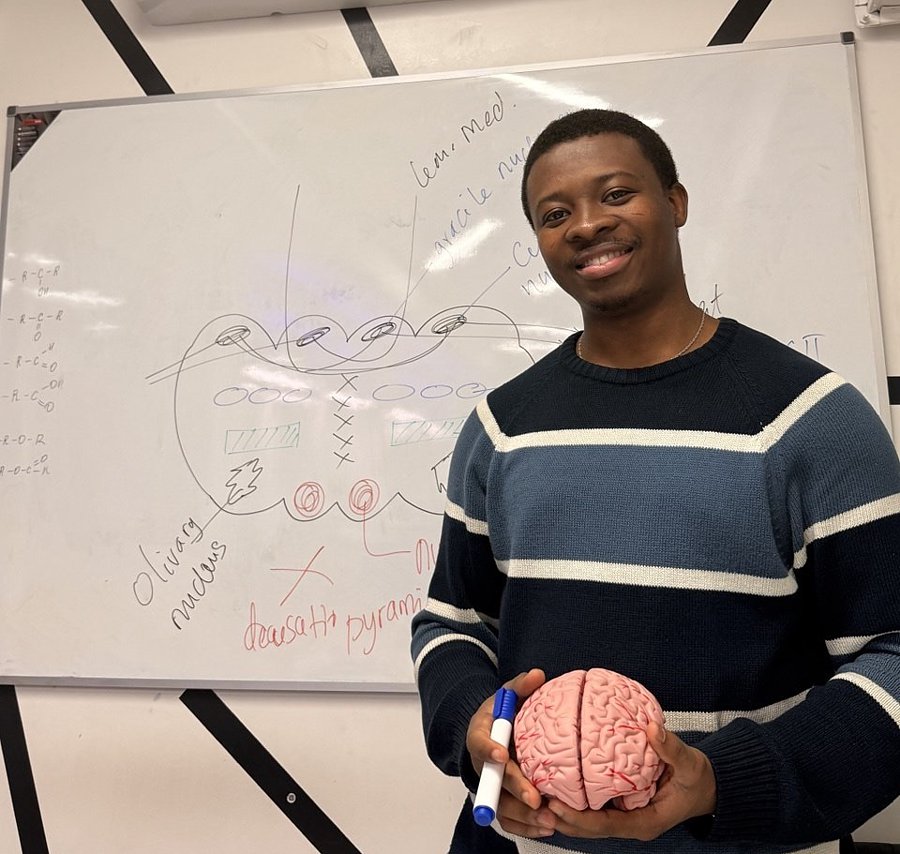
Medical Institute students traditionally achieve outstanding results. Seno Tengei, a fourth-year General Medicine student from Ghana, became the winner of the First International Student Olympiad in Pathological Anatomy "United in Diversity: Morphology without Boundaries". Members of the jury were impressed by his deep knowledge and a unique creative work – a play in which the organs of the human body were portrayed as political systems.
Seno turned organs into political utopias: the liver acted as a communist system dying from its own generosity, the brain was depicted as an oligarchy of neurons overthrown by a dementia-democrat, the heart appeared as a monarchy ruled by one king-node, while cancer represented anarchy that rejected the social contract of contact inhibition between cells.
"I combined Pavlov and Machiavelli, Shakespeare and Picasso. Sounds crazy? That's right. But pathology is the madness of order. The body never breaks down randomly. It breaks according to its own rules. My goal was to reveal these rules through political philosophy and playwriting," said Seno Tengei.
Elizaveta Shlepotina, a sixth-year General Medicine student and head of the "REMEDY" Professional Student Association, took second place at the conference "Topical Issues of Neuroscience" with her project "Peculiarities of Treating Children Arteriovenous Malformation Ruptures: A Retrospective Analysis of Nine Patients and a Clinical Case Review". The conference was held as part of the of Almazov Youth Medical Forum which brought together young researchers, resident physicians, students, and school students from various regions of Russia and other countries.
What made Elizaveta’s research particularly noteworthy was that almost all of the patients described in the study underwent surgery during the critical stage of the disease. The diagnosis included CT, MRI, cerebral angiography, while surgical treatment combined endovascular embolization followed by microsurgical resection.
Irina Moskvitina, a sixth-year General Medicine student, gave a speech in the "Cardiology: Non-Coronary Heart Diseases" section and took first place with a project "The Impact of Elevated Lipoprotein(a) Levels on the Development of Chronic Kidney Disease: An Analysis and Ratio of Renal Function Parameters to Lipoprotein(a) Levels in a Russian Patient Cohort".
"I'm glad that I had this opportunity to present my research and that the panel highly praised it. The forum gave me a chance to learn about the most promising areas of current medical research and discover what students and young scientists from universities across Russia and the CIS are working on. The Almazov Youth Medical Forum also became a place to build new professional connections and gain valuable presentation experience," said Irina Moskvitina.
High honors
Students of RUDN Law Institute received the Medal of the Ministry of Justice of the Russian Federation for "Academic Excellence" at the St. Petersburg International Legal Forum. The awards were presented by Minister of Justice Konstantin Chuychenko.
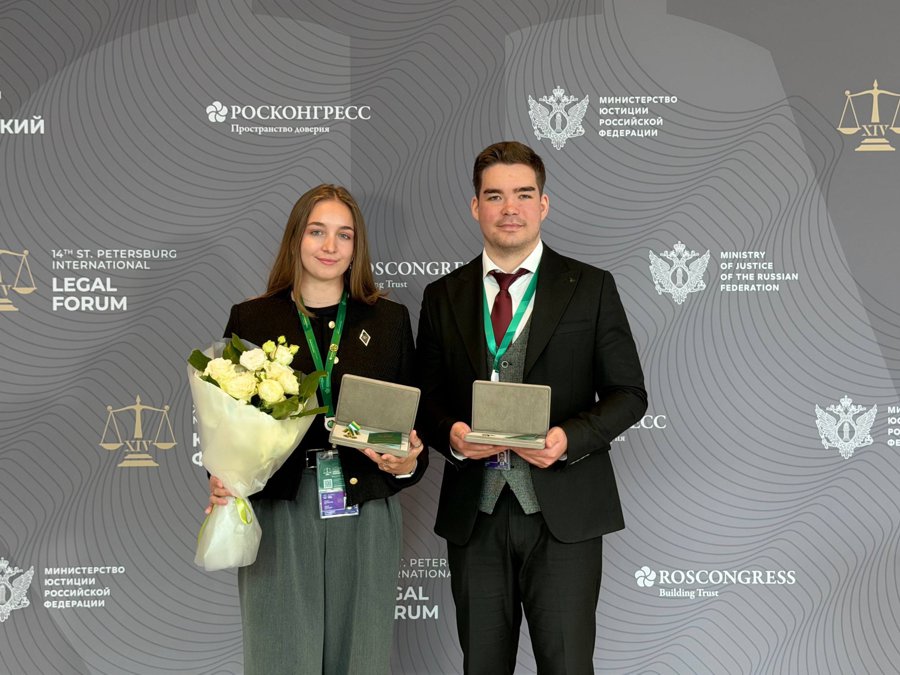
List of medalists:
- Ulyana Kostyleva, a graduate of the program "Judicial Power, Public Prosecutor's Supervision, Organization of Law Enforcement, Bar and Notary";
- Ivan Roschepkin, a graduate of the program "Civil Law, Family Law, Business Law, Private International Law".
"For me, this medal is the most prestigious award and I'm deeply grateful to RUDN University for helping me realize my potential and earn such an honor," said Ulyana Kostyleva.
Innovative development
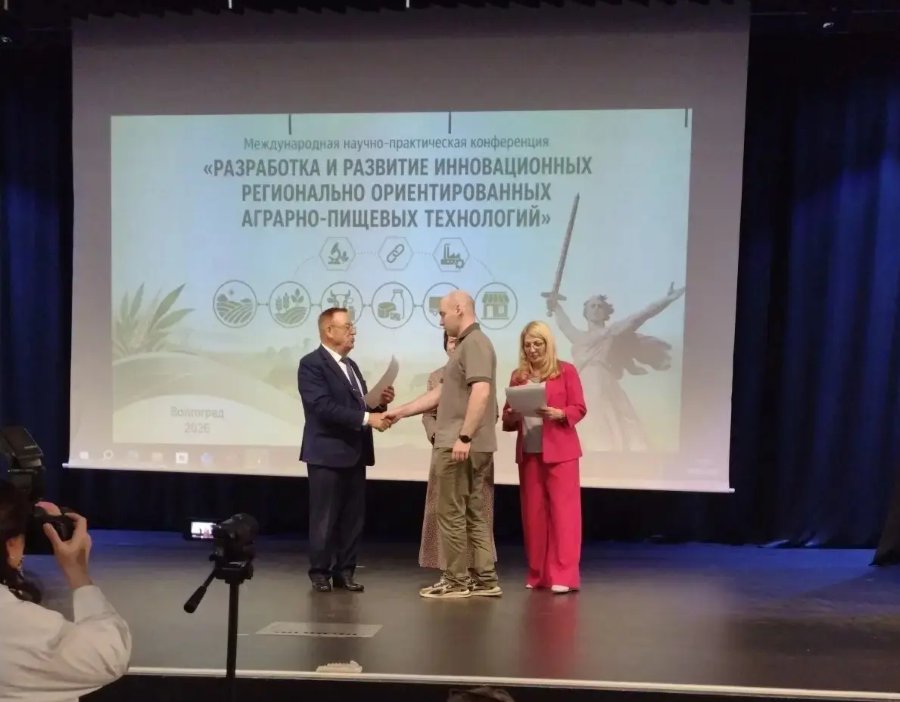
Evgeniy Kozlov, a junior researcher of RUDN Institute of Environmental Engineering, was awarded a First Prize Diploma at the international scientific and practical conference "Development of Innovative Region-Oriented Agricultural and Food Technologies" which took place in Volgograd in early June. Nursing calf starter feed, developed under the supervision of PhD in Biology Olga Mironova, sparked great interest among the professional community.
The innovation is based on the use of agricultural and food industry by-products that are traditionally considered low-value because of their limited nutritional value and the challenges associated with their disposal. The experimental fermented feed includes:
- brewer's grains – a by-product of the brewing industry obtained during barley processing;
- wheat bran – a by-product of flour milling;
- sunflower cake – a by-product of oil extraction.
According to Evgeniy, the next stages of the research will focus on the development of feeding algorithms using agricultural by-products for different animal species; studying the effects of fermented feed on animal health; patenting the technology; spreading and certifying the product for commercial use in the agricultural sector.
RUDN Faculty of Artificial Intelligence offers the bachelor’s program "Artificial Intelligence: Development and Training of Intelligent Systems" as part of the "Top AI" project (Data Scientist level), supported by the Ministry of Digital Development, Communications and Mass Media of the Russian Federation. It is not just another degree program – it is a comprehensive educational ecosystem that combines fundamental science, applied development, and students’ early integration into the professional environment. Here is how the grant opens up opportunities and what makes the program unique.
The Academy of Engineering is entering a new stage of development with the launch of four large-scale strategic initiatives. The projects include the establishment of new Base Departments in partnership with leading companies, setting up unique creative laboratories, and strengthening the Academy’s workforce capacity. Together, these initiatives are designed to reinforce the University’s position as a center of excellence in engineering and the arts, and bring together advanced technologies, fundamental science, architecture, monumental art, and the practical needs of the Russian economy.
On April 25-26, RUDN University hosted the Moscow qualifying stage of the XIV All-Russian “Chinese Bridge” Competition. One of the most prestigious contests brought together 288 Moscow schoolchildren, who demonstrated their knowledge of Chinese language, culture and traditions.