




Manager, Secretary and Welder Are the Most Harmful Professions for Psychological Health, a Study by a RUDN University Physician Showed
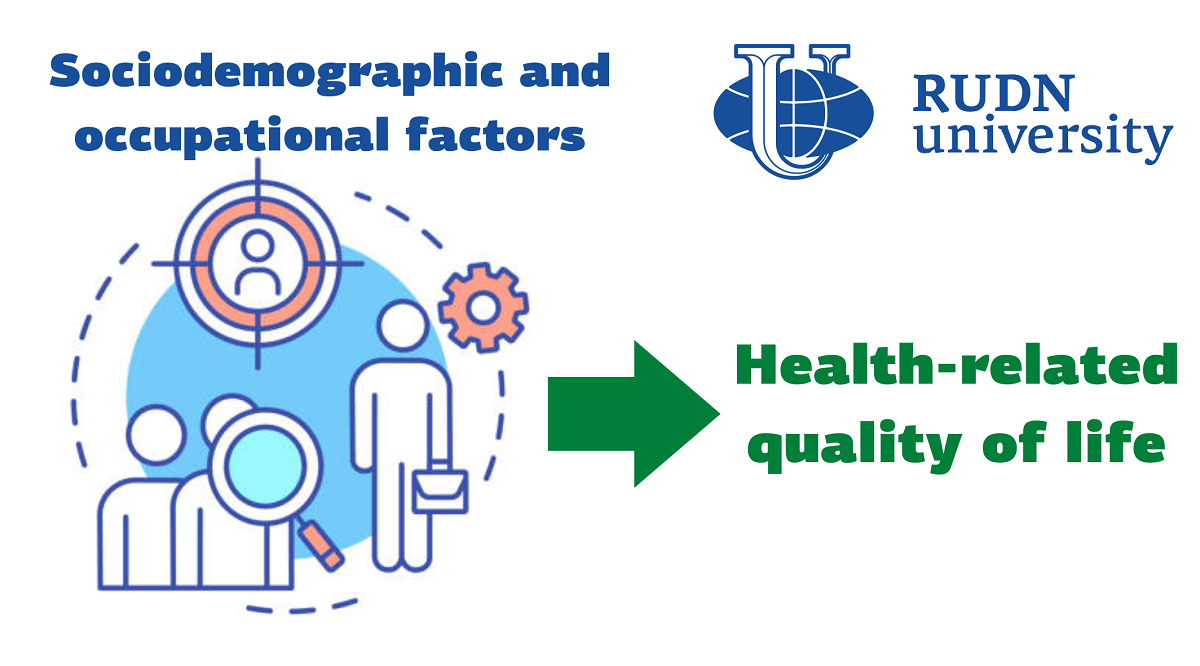
Quality of life is a complex concept that shows the level of all aspects of human life: material, spiritual, physical, social and others. An important component of quality of life is the parameters related to health (Health-related quality of life, HRQL). It includes two components — physical and psychological (mental). Separate studies have shown that HRQL depends on professional activities. For example, it may be lower in nurses and welders. This can be associated with both fatigue and burnout, and harmful physical effects. However, in some countries, I have never conducted a comprehensive ASSESSMENT of HRQL.
“HRQL among the population of Kazakhstan has never been evaluated, and the impact of lifestyle has not been included in such studies. Moreover, almost nothing is known about the connection between the profession and HRQL in Kazakhstan. We suggested that HRQL may be affected by smoking, alcohol consumption, regular physical activity and professions. So we conducted a large-scale study to find out whether they are related. profession and lifestyle with HRQL in Kazakhstan”, — Doctor of Medical Sciences Denis Vinnikov, Professor of the Department of Biochemistry named after Academician T. T. Berezov RUDN University.
Doctors conducted a survey in which 1500 people took part, residents of the largest city of Kazakhstan, Alma-Ata. The average age of the survey participants is 28 years, men, and women — exactly in half. The doctors took into account the social and economic situation of the participants, their lifestyle, professional history and other characteristics according to theSF-8 questionnaire. The results were analyzed using regression analysis, which shows the degree of influence of one parameter on another.
According to the results of the survey, it turned out that the profession does not affect physical health. Moreover, this result was the same for groups of men and women, smokers, and non-smokers, for different age groups and other parameters. But on psychological health, labor activity has affected. Working as a manager (with odds of −1.66), welder (-5.03) or secretary (-5.18) negatively affects mental health. The strongest “risk factors” for reduced HRQL (both physical and psychological) were age, low income, and female gender.
“The results lead to conclusions for public health. Income remains one of the most powerful determinants of HRQL, regardless of age, active and passive smoking, physical activity, occupation, gender. Therefore, it is necessary to reduce poverty, not just improve the quality of health care. Moreover, improving women’s access to health care, quitting smoking and regular physical activity should all contribute to improving HRQL. As for the relationship of professions with HRQL, further research is needed to elucidate the mechanism of psychological deterioration. — Doctor of Medical Sciences Denis Vinnikov, Professor of the Department of Biochemistry named after Academician T. T. Berezov RUDN University.
The results are published in the journal Health and Quality of Life Outcomes.
Imagine a world where everyone has enough food, clean water, access to education, and decent work. A world where nature is protected and the future of our planet is cared for. These are the Sustainable Development Goals—to achieve a sustainable future for all! To this end, in 2015, the United Nations (UN) defined 17 Sustainable Development Goals (SDGs). The SDGs are a global plan that helps countries and people work together towards a better future. All 193 UN member states have joined the plan.
Researchers from the Faculty of Artificial Intelligence at RUDN University conducted a large-scale study that revealed systemic errors in large language models (LLMs) when diagnosing depression based on text. This work, carried out in collaboration with colleagues from AIRI, Federal Research Center “Computer Science and Control” of the Russian Academy of Sciences, Ivannikov Institute for System Programming of the Russian Academy of Sciences, Moscow Institute of Physics and Technology, and MBZUAI, not only identifies the problem but also lays the foundation for the creation of more reliable and secure tools for detecting depression and anxiety.
Alexandra Sentyabreva, a junior researcher at the Laboratory of Cell Technologies and Tissue Engineering at RUDN Research Institute of Molecular and Cellular Medicine at the Russian University of People's Friendship, won the competition for young scientists at the All-Russian Scientific Conference “Topical Issues of Morphogenesis in Norm and Pathology.” She was awarded the Academician A.P. Avtsyn Prize.
Imagine a world where everyone has enough food, clean water, access to education, and decent work. A world where nature is protected and the future of our planet is cared for. These are the Sustainable Development Goals—to achieve a sustainable future for all! To this end, in 2015, the United Nations (UN) defined 17 Sustainable Development Goals (SDGs). The SDGs are a global plan that helps countries and people work together towards a better future. All 193 UN member states have joined the plan.
Researchers from the Faculty of Artificial Intelligence at RUDN University conducted a large-scale study that revealed systemic errors in large language models (LLMs) when diagnosing depression based on text. This work, carried out in collaboration with colleagues from AIRI, Federal Research Center “Computer Science and Control” of the Russian Academy of Sciences, Ivannikov Institute for System Programming of the Russian Academy of Sciences, Moscow Institute of Physics and Technology, and MBZUAI, not only identifies the problem but also lays the foundation for the creation of more reliable and secure tools for detecting depression and anxiety.
Alexandra Sentyabreva, a junior researcher at the Laboratory of Cell Technologies and Tissue Engineering at RUDN Research Institute of Molecular and Cellular Medicine at the Russian University of People's Friendship, won the competition for young scientists at the All-Russian Scientific Conference “Topical Issues of Morphogenesis in Norm and Pathology.” She was awarded the Academician A.P. Avtsyn Prize.