




RUDN University mathematician named the main problems of autopilots when detecting pedestrians
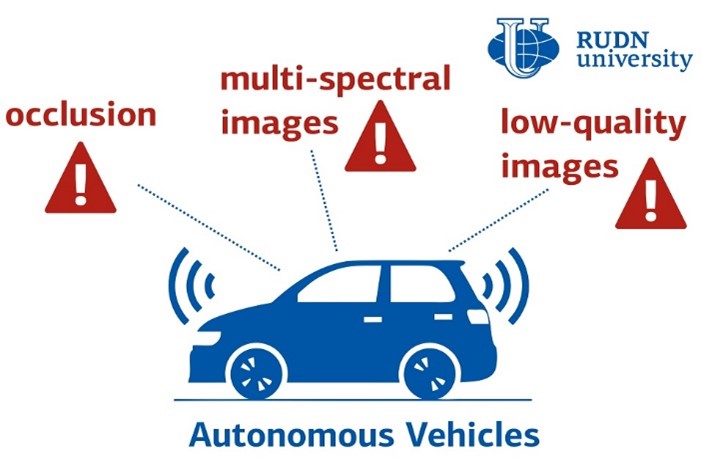
Cars and other self-driving vehicles have already begun to enter everyday life. However, for this technology to be widely adopted, several fundamental characteristics need to be improved. One of them is pedestrian detection. For this, deep learning technologies are used — artificial neural networks. RUDN mathematicians with colleagues from Egypt, Saudi Arabia and China analyzed the latest research in this direction.
“In recent years, autonomous vehicles have become increasingly popular. They improve safety and convenience, reduce fuel consumption, reduce traffic congestion and accidents, save costs and increase reliability. However, before they are fully deployed on the roads, several primary tasks need to be solved. Precise detection of pedestrians is a very difficult task. Deep learning technologies show great potential for solving this problem. We have compiled an overview of the problems of pedestrian detection and the latest advances in solving them using deep learning methods,” Ammar Muthanna, PhD, Junior Researcher at the Research Center for Modeling High-Tech Systems and Infocommunications, RUDN University.
Mathematicians have drawn attention to three main problems that arise when detecting pedestrians using deep learning — obstacles, poor image quality, multispectral images. The latter is a series of images of the same object, but obtained in different ranges. For example, the usual optical image and in the infrared range. It is assumed that the data is obtained from lidars and cameras, from where the deep learning model comes. Mathematicians have reviewed the different approaches that are used to build such models, and called their advantages and disadvantages.
RUDN mathematicians noticed that different construction methods give not only different results, but also different time and accuracy of work. For example, more modern methods give a more accurate answer, but it takes more time. Therefore, the scientists concluded, it is important to implement an approach that can find a balance between accuracy and speed. And one that will meet practical goals. Mathematicians also noticed that the data available for training is not heterogeneous enough and may not give a complete picture. For example, images in the optical range work better during the day, and in the infrared — in the dark. For the algorithm to be efficient around the clock, large heterogeneous data sets are needed for training.
Among the goals for future research in this area, RUDN mathematicians named the detection of small and obstructed objects, work in poor lighting, a combination of 3 D and 2 D approaches. The researchers also suggest focusing on improving speed and accuracy.
Results published in Electronics.
Imagine a world where everyone has enough food, clean water, access to education, and decent work. A world where nature is protected and the future of our planet is cared for. These are the Sustainable Development Goals—to achieve a sustainable future for all! To this end, in 2015, the United Nations (UN) defined 17 Sustainable Development Goals (SDGs). The SDGs are a global plan that helps countries and people work together towards a better future. All 193 UN member states have joined the plan.
Researchers from the Faculty of Artificial Intelligence at RUDN University conducted a large-scale study that revealed systemic errors in large language models (LLMs) when diagnosing depression based on text. This work, carried out in collaboration with colleagues from AIRI, Federal Research Center “Computer Science and Control” of the Russian Academy of Sciences, Ivannikov Institute for System Programming of the Russian Academy of Sciences, Moscow Institute of Physics and Technology, and MBZUAI, not only identifies the problem but also lays the foundation for the creation of more reliable and secure tools for detecting depression and anxiety.
Alexandra Sentyabreva, a junior researcher at the Laboratory of Cell Technologies and Tissue Engineering at RUDN Research Institute of Molecular and Cellular Medicine at the Russian University of People's Friendship, won the competition for young scientists at the All-Russian Scientific Conference “Topical Issues of Morphogenesis in Norm and Pathology.” She was awarded the Academician A.P. Avtsyn Prize.
Imagine a world where everyone has enough food, clean water, access to education, and decent work. A world where nature is protected and the future of our planet is cared for. These are the Sustainable Development Goals—to achieve a sustainable future for all! To this end, in 2015, the United Nations (UN) defined 17 Sustainable Development Goals (SDGs). The SDGs are a global plan that helps countries and people work together towards a better future. All 193 UN member states have joined the plan.
Researchers from the Faculty of Artificial Intelligence at RUDN University conducted a large-scale study that revealed systemic errors in large language models (LLMs) when diagnosing depression based on text. This work, carried out in collaboration with colleagues from AIRI, Federal Research Center “Computer Science and Control” of the Russian Academy of Sciences, Ivannikov Institute for System Programming of the Russian Academy of Sciences, Moscow Institute of Physics and Technology, and MBZUAI, not only identifies the problem but also lays the foundation for the creation of more reliable and secure tools for detecting depression and anxiety.
Alexandra Sentyabreva, a junior researcher at the Laboratory of Cell Technologies and Tissue Engineering at RUDN Research Institute of Molecular and Cellular Medicine at the Russian University of People's Friendship, won the competition for young scientists at the All-Russian Scientific Conference “Topical Issues of Morphogenesis in Norm and Pathology.” She was awarded the Academician A.P. Avtsyn Prize.