


RUDN University biologist found that Chinese date improves the immune system of fish

RUDN University biologist found that Chinese date improves the immune system of fish
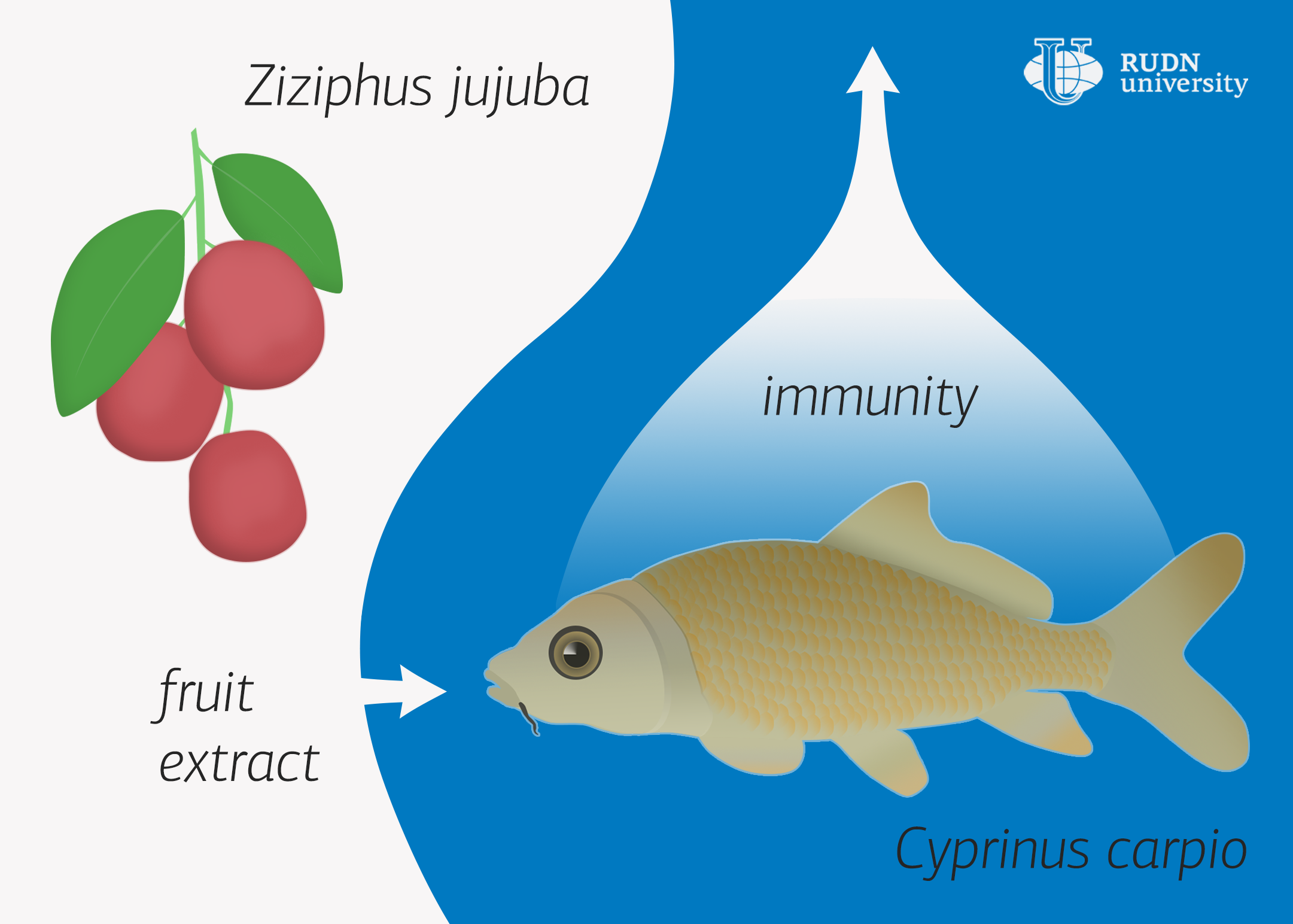
RUDN University biologist proved that the extract of the fruit of the Chinese date boosts immunity in carp. The addition of date juice to the diet increases the reaction of the immune system of fish to extraneous compounds.

In fisheries, antibiotics are usually used to prevent infections. However, their use leads to the emergence of strains of bacteria resistant to them. This is a potential threat not only to fish but also to humans – in case that antibiotic-resistant bacteria begin to be transmitted from person to person. Researchers are looking for alternative drugs suitable for use in ichthyology.

Morteza Yousefi, a biologist from the RUDN University, and his colleagues investigated the properties of Zizyphus (Zizyphus jujube), known as "Chinese date" and found that it can be used as an antimicrobial agent for fish.

Morteza Yousefi tested the immunostimulatory properties of this plant on carp (Cyprinus carpio). The biologists gave the fish a solution of ethanol and distilled water with Ziziphus fruit juice with a concentration of 0.25%, 0.5%, and 1%. Then they took samples from the fish mucosa and monitored how immune parameters change: the number of antibodies, the activity of enzymes – proteases and the expression of genes of signaling molecules – cytokines, which, in particular, trigger phagocytosis, that is, the destruction of bacteria.

Analysis of the data showed that carp, which were given a solution of the fetus with a concentration of 0.5%, increased the number of antibodies. The more antibodies in the blood, the more extraneous compounds – antigens – they can "catch".

Besides, ichthyologists have found a connection between the extract of dates in the diet of fish and the presence of cytokines. The experiment showed that the concentration of the solution is 0.25% does not change the immune reactions of carp, but 0.5% and 1% solution increases the expression of cytokine genes and the activity of protease enzymes that are involved in the "digestion" of killed pathogenic bacteria and in triggering the processes of extraneous cells death (apoptosis).

The experiment showed that the juice of the Chinese date can increase the immunity of carp, which means that it can be used as an antibacterial agent in fisheries working on the principle of "green aquaculture". The discovery of immune stimulation of the carp juice of Ziziphus fruit in the future will allow fishermen to reduce the damage from infections, without provoking the emergence of antibiotic-resistant strains of bacteria.

The results are published in the journal Fish and Shellfish Immunology.

News
All news
Science
06 Apr
RUDN and China: Science beyond borders

In the last five years, academic staff of RUDN alongside the Chinese universities and research centers has achieved impressive results. More than 1,000 scientific publications were made jointly in a wide spectrum from engineering and technology to medicine and social sciences. 19 of these materials were published in top-rated journals which verifies that the works were world-class level.

Science
25 Mar
RUDN University Among the Leaders in the BRICS ESG University Ranking!

RUDN University has been included among the leaders in the BRICS ESG University Ranking among 65 leading universities. They were assessed on 20 criteria, ranging from education and research to environmental and social agendas.

Science
25 Feb
New housing types and the search for balance: RUDN University hosts first PhD defenses in Architecture

At a meeting of the new RUDN University Dissertation Council in the specialties of 2.1.12 “Architecture of Buildings and Structures. Creative Concepts of Architectural Activity” and 2.1.11 “Theory and History of Architecture, Restoration and Reconstruction of Historical and Architectural Heritage”, three postgraduate students — Natalia Kalinina, Evgeny Ogienko, and Yulia Loginova — were awarded PhD degrees in Architecture for the first time in the university's history.