




RUDN Academy of Engineering Launches Four Strategic Projects: From Automotive Industry to Sculpture and Oil Refining
Base Department of NAMI
The Academy of Engineering is establishing the Department of Materials Science and Technologies in partnership with the Federal State Unitary Enterprise NAMI, Russia’s leading research and engineering center for the transportation industry.
Founded in 1918 and celebrating its 105th anniversary in 2023, NAMI has evolved from the country’s first automotive research laboratory into one of Europe’s largest automotive testing centers. Today, it serves as Russia’s principal state research center, bringing together the country’s leading engineering expertise. It was at NAMI that the legendary Unified Modular Platform project was launched in 2013 under a directive of the Russian Government.
Over the years, NAMI has become a world-class research and engineering center, developing the full line of AURUS premium vehicles, now regarded as the flagship of the Russian automotive industry. Among its latest achievements is the NAMI Self-Driving System, a fully integrated autonomous driving platform featuring proprietary software, algorithms, and AI. Installed on the AURUS Komendant crossover, the system meets Level 5 autonomous driving standards and is capable of operating without human intervention. The partnership with NAMI will provide students with access to state-of-the-art equipment and the opportunity to work on real-world engineering challenges that Russian industry faces.
Shaping the architecture of the future
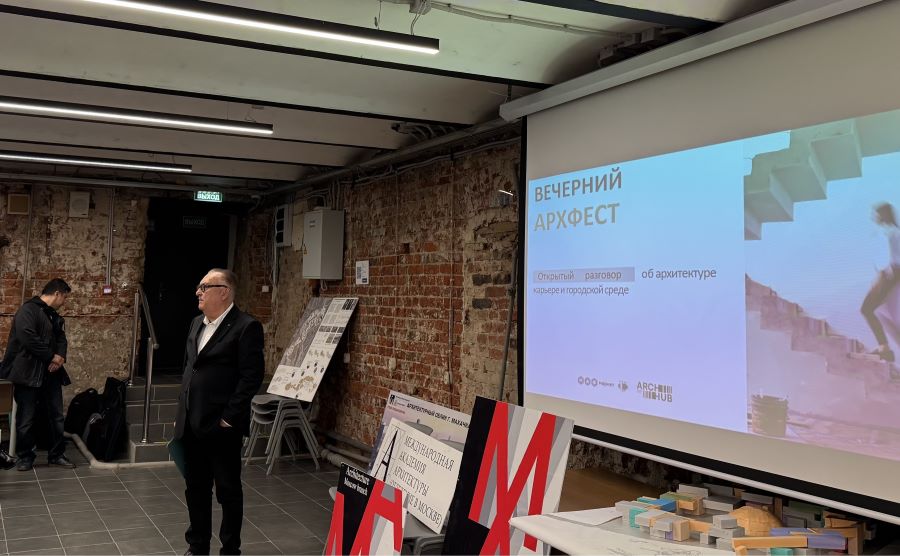
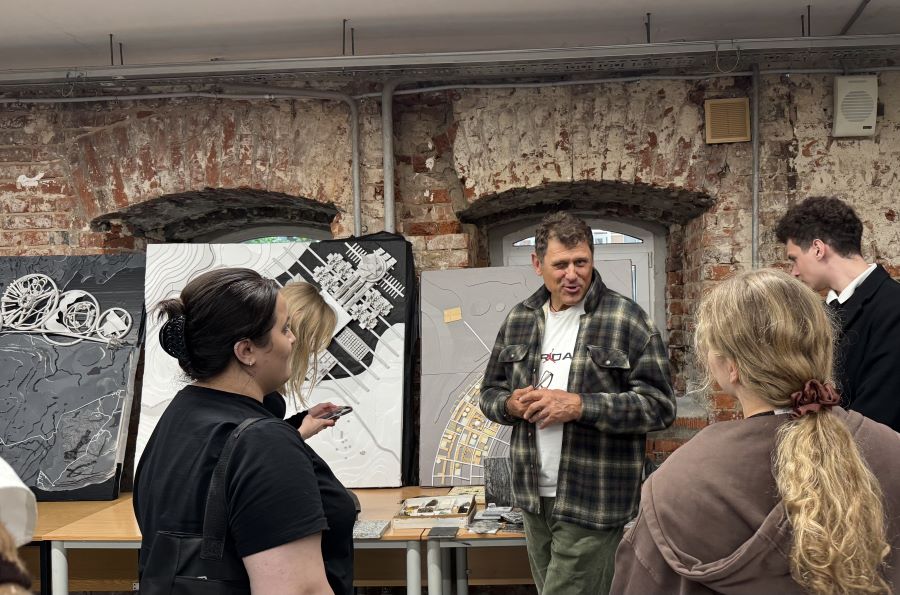
A new Laboratory of Architectural Design and Architectural Heritage Restoration will be established for architecture students. The laboratory will operate on the basis of the student section of the Moscow Branch of the International Academy of Architecture (IAA). The laboratory will be headed by Yuri Vissarionov, a distinguished practicing architect, First Vice President of IAA Moscow Branch, Corresponding Member of the Russian Academy of Architecture and Construction Sciences, and Member of the Board of the Union of Moscow Architects.
The laboratory will also serve as an official branch of Vissarionov’s architectural studio, PTAM Vissarionov, enabling students to participate directly in large-scale educational and design projects within the University. Throughout his career, Yuri Vissarionov has designed numerous landmark projects, including the Olympic Holiday cetnter Yuzhny-2 in Sochi, the Severnaya Palitra residential complex near St. Petersburg, and architectural projects in Moscow, Nizhny Novgorod, Rostov-on-Don, Volgograd, and other Russian cities. He is the recipient of the First Prize of the Union of Architects of Russia, the ARX Awards National Prize, the Moscow Architecture Prize, the Gold Diploma of the Moscow Branch of the International Academy of Architecture, and multiple awards from the Interarch International Biennale in Sofia. Working under the guidance of such an accomplished architect will provide students with invaluable experience in real architectural practice at the intersection of tradition and modern technology.
Sculpture in engineering
The Academy’s Sculpture Laboratory has been transformed into a scientific and creative research unit under the leadership of renowned sculptor, artist, and graphic designer Vasiliy Selivanov, a member of the Union of Artists of Russia. The laboratory will operate as a branch of Selivanov’s personal studio, giving students access to his unique artistic methods and techniques, including his patented bronze-and-glass sculpture technique developed through years of experimentation with advanced polymer materials.
Being a graduate and former Head of the Department of Sculpture and Composition at the Ilya Glazunov Russian Academy of Painting, Sculpture and Architecture, Vasiliy Selivanov has created monuments honoring Kuzma Minin, Leo Tolstoy, Prince Sviatoslav, Nikolai Rimsky-Korsakov, Igor Kurchatov, Vladimir Mayakovsky, Vice Admiral Vasily Golovnin on the island of Vanuatu, Ivan the Terrible in Vologda, and writer Vasiliy Belov in his native village of Timonikha. His works are held in private collections across Russia, the United States, the United Kingdom, and Germany, while his solo exhibition in Sicily received wide acclaim. Patriarch Kirill of Moscow and All Rus' has also highly praised the artist’s work. The appointment of such a distinguished sculptor underscores the unique environment of the Academy of Engineering, where advanced technologies are combined with monumental art.
New opportunities in petroleum engineering
The Academy of Engineering is also establishing a new Department of Petroleum Engineering in response to the growing demand for highly qualified professionals in the oil and gas sector. The Academy’s strategic partner will be the All-Russian Research Institute for Oil Refining, part of Rosneft Oil Company. The department will be headed by Dmitry Potanin, PhD of Technical Sciences, who has advanced from an engineering position to leading major research divisions at All-Russian Research Institute for Oil Refining.
Under his leadership, more than 100 projects have been completed, including initiatives commissioned by the Ministry of Science and Higher Education and the Ministry of Defense of the Russian Federation. His key achievements include the development of the industrial production technology for Naftil fuel approved for use in Roscosmos rocket and space technology, Russia’s first Euro 6 gasoline technology, already introduced at Rosneft gas stations, and the RN-MFP-2401 multifunctional additive used in Pulsar premium fuels. Potanin has also led projects focused on developing low-carbon transportation fuels, unleaded aviation gasoline, and the new version of Russia’s GOST 1012 fuel standard. Collaboration with one of Russia’s leading petroleum research institutes and mentorship from an active Rosneft executive will provide students with direct access to real industrial cases studies and advanced oil refining technologies, while giving the University a strong and lasting partnership with the country's largest oil company.
These four strategic initiatives represent far more than organizational change. They open new opportunities for Academy of Engineering students to engage with world-class research, high-tech manufacturing, architecture, and the arts. From the code behind the autonomous AURUS to bronze and glass, from the molecular design of fuels to the restoration of architectural heritage – this is where the future is being shaped, where engineers become creators and creators are equipped with the most advanced knowledge.
RUDN Faculty of Artificial Intelligence offers the bachelor’s program "Artificial Intelligence: Development and Training of Intelligent Systems" as part of the "Top AI" project (Data Scientist level), supported by the Ministry of Digital Development, Communications and Mass Media of the Russian Federation. It is not just another degree program – it is a comprehensive educational ecosystem that combines fundamental science, applied development, and students’ early integration into the professional environment. Here is how the grant opens up opportunities and what makes the program unique.
Students and researchers of RUDN University regularly become winners and prize-winners of national and international competitions, scientific conferences and Olympiads, receiving awards from various governmental departments. Here are some of the university’s most remarkable achievements of this summer.
On April 25-26, RUDN University hosted the Moscow qualifying stage of the XIV All-Russian “Chinese Bridge” Competition. One of the most prestigious contests brought together 288 Moscow schoolchildren, who demonstrated their knowledge of Chinese language, culture and traditions.